
A guest is standing in front of a restaurant wine list, trying to choose something good for the table. They do not need a lecture on soil types or a test on French appellations. They need a few useful clues, a little confidence, and permission to trust their own taste. That simple moment says a great deal about the future of wine education.
For a long time, wine learning has been built around proving what you know. There is real value in serious study, and certifications matter for many professionals. But for most people who buy wine, host dinner, plan a winery trip, or order a bottle with friends, the goal is not to pass an exam. The goal is to enjoy wine more fully and talk about it without feeling like they have wandered into someone else’s private club.
Why Wine Education Is Shifting
Wine information is no longer hard to find. A phone can identify a label, define a grape, translate a menu, or offer food-pairing suggestions in seconds. The problem is not access. It is knowing which information is useful, which is overly simplified, and what to do when the answer is, honestly, “it depends.”
That changes the job of a good wine educator. The value is less about reciting facts and more about providing context. Why might two California Chardonnays taste completely different? What makes a bottle worth bringing to a dinner party? When does an unfamiliar region offer better value than the usual standby? A helpful answer makes room for a person’s preferences, budget, occasion, and curiosity.
There is also a cultural shift underway. Many younger drinkers, and plenty of experienced ones, are less interested in being told what is prestigious. They want to know who made the wine, how it was made, whether it fits the moment, and whether they will actually like it. They care about stories, but they can spot a rehearsed sales pitch from across the tasting room.
The best education will meet that expectation. It will be informed without being performative.
Credentials Still Matter, but They Are Not the Only Measure
Formal wine education remains essential for sommeliers, buyers, importers, winemakers, and others making professional decisions. The discipline of tasting systematically, understanding regions, and learning the business of wine creates real expertise. There is no need to pretend otherwise.
But the industry has sometimes treated credentialed knowledge as the only kind that counts. That leaves out the home cook who knows exactly which light red works with their barbecue, the traveler who has spent years returning to a favorite producer, and the winery worker whose understanding comes from pruning vines, cleaning tanks, or pouring at the tasting bar.
The future should hold space for both. Technical knowledge and lived experience are not competitors. Together, they make wine more understandable and more human.
The Future of Wine Education Puts Confidence First
Confidence is not the same as certainty. You do not need to declare that a wine has notes of wet slate, crushed rose petal, and a very specific kind of forest floor. You can simply say, “This feels bright and citrusy,” or, “I like this because it is fresh rather than heavy.” That is a real observation. It gives everyone at the table somewhere to start.
A modern wine education experience should teach people how to notice, not just what to memorize. Acid makes your mouth water. Tannin can feel drying or grippy. Oak may show up as toast, baking spice, vanilla, or simply a rounder texture. These are practical ideas because they help people predict what they may enjoy next.
That approach also makes food pairing less fussy. Instead of hunting for one supposedly perfect answer, people can learn a few dependable principles: match wine weight to food weight, use acidity to refresh rich dishes, and remember that sweetness, spice, and sauce often matter more than the protein on the plate. Then they can adapt. A casual pizza night and a celebratory steak dinner deserve different decisions, but neither requires anxiety.
Tasting Will Become More Social and Sensory
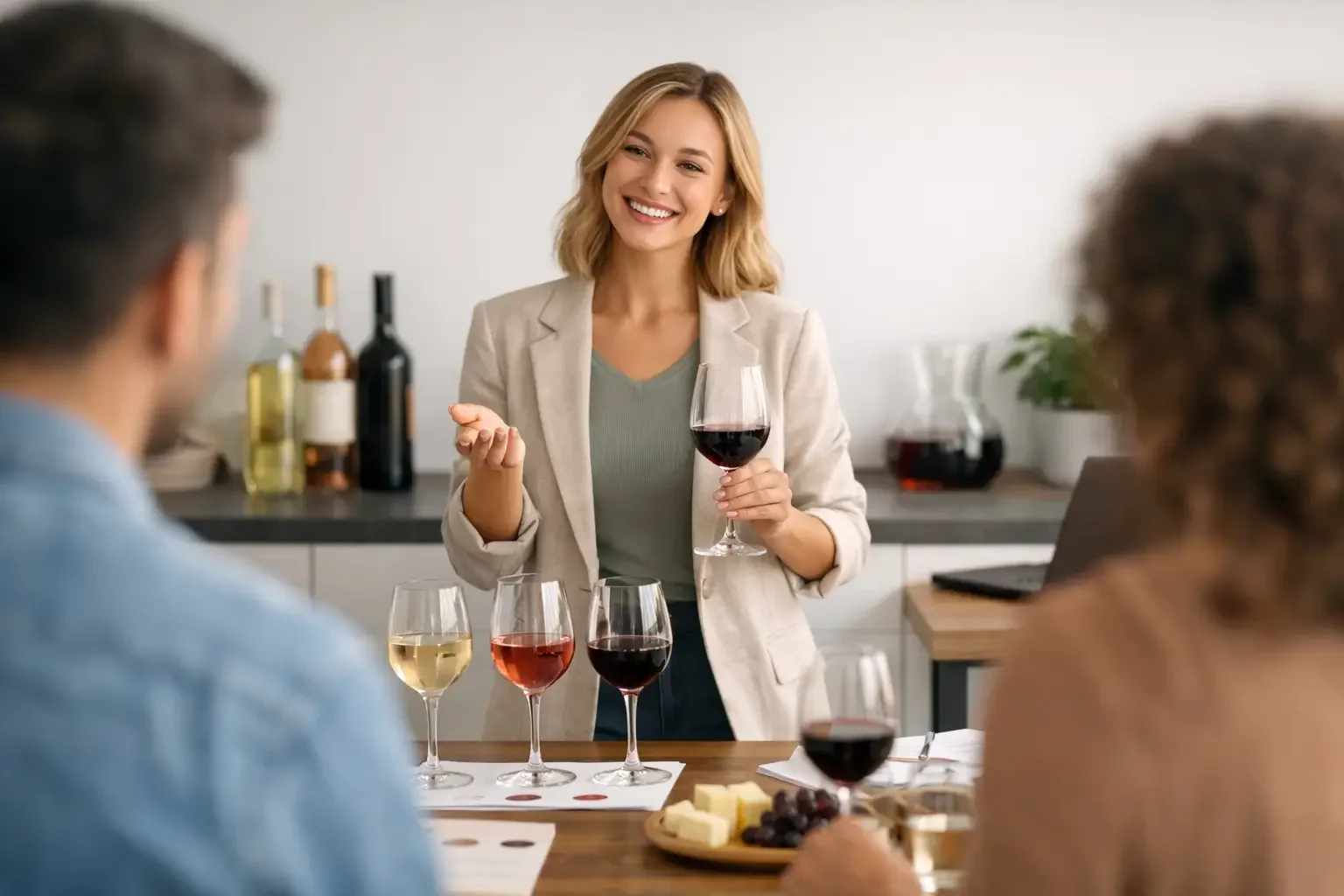
The most memorable wine education rarely happens under fluorescent lights with a multiple-choice sheet. It happens while comparing two bottles side by side, noticing how a wine changes with food, or hearing a winemaker explain a difficult harvest.
This is where private tastings, team events, and thoughtful winery visits have real staying power. They turn abstract information into a shared experience. A group may not remember every vintage date, but they will remember discovering that they all preferred the lighter red, or that a friend who “doesn’tlike white wine" loved a textured Chenin Blanc.
Expect more education built around contrast: cool-climate versus warm-climate Cabernet, classic versus modern Rioja, stainless steel versus oak-aged white wine. Comparison teaches quickly because the glass gives immediate feedback. It also reminds people that preferences are allowed to be personal.
Technology Will Help, but It Cannot Taste for You
Digital tools will continue to make wine easier to explore. Virtual tastings can connect guests across cities. Short videos can demystify a region before a trip. Personalized recommendations can help someone move beyond buying the same bottle every week.
Artificial intelligence will likely make this even more convenient. It can organize tasting notes, suggest pairings, explain unfamiliar terms, and help consumers make sense of a crowded shelf. For wineries, it can support better audience research and clearer communication.
Still, technology has limits. It cannot know that your idea of a great evening is takeout tacos on the patio, a birthday dinner with eight opinions at the table, or a quiet glass after a long week. It cannot replace the generosity of a good host or the insight of someone who listens before recommending a bottle. Wine is sensory, agricultural, and social. Education should remain that way.
What This Means for Wineries
For wineries, education is no longer a side project reserved for tasting room scripts. It is part of brand strategy. If a customer cannot quickly understand what makes a wine distinct, who it is for, and why it matters, even a beautifully made bottle can get lost.
The answer is not to make every message simpler until it becomes generic. It is to make it clearer. A winery can talk about site, farming, fermentation, and heritage in plain language without flattening the story. “We farm this windy hillside because it keeps the fruit fresh” is more inviting than a paragraph of technical jargon with no connection to the person holding the glass.
This matters especially for small and mid-sized producers. They often have the most compelling stories, but may be competing with larger brands that have bigger budgets and louder distribution. Education gives them a way to build trust before a customer tastes the wine. It can also create a better experience after the purchase, when a buyer understands how to serve the bottle, what to pair with it, and when to open the next one.
The trade-off is that education takes restraint. Every detail may be true, but not every detail belongs in the first conversation. Start with the point of connection. Save the deeper layer for the person who wants it.
How to Learn About Wine Without Turning It Into Homework
Start with bottles you can revisit. Buy two different expressions of the same grape, or two wines from the same country at different price points. Taste them with dinner, write down a few plain-English impressions, and notice which one disappears first.
When you visit a winery, ask questions that lead to a story: What are you most excited to pour right now? What was difficult about this vintage? What do you drink at home? Those questions often reveal more than asking for a technical rundown of every barrel program.
If you are planning a gathering, choose a simple theme rather than trying to cover the whole world of wine. Three Mediterranean whites for a summer meal, a comparison of sparkling wines, or reds that work slightly chilled can be plenty. A small focus gives people room to taste and talk instead of feeling like they are behind.
Most of all, pay attention to your own patterns. The wine you enjoy is not automatically the most expensive, rarest, or most admired by someone else. Your preferences will change over time, and that is part of the fun.
The next good bottle is not a test. Open it with people you enjoy, ask one honest question about what is in the glass, and let your answer be enough.