
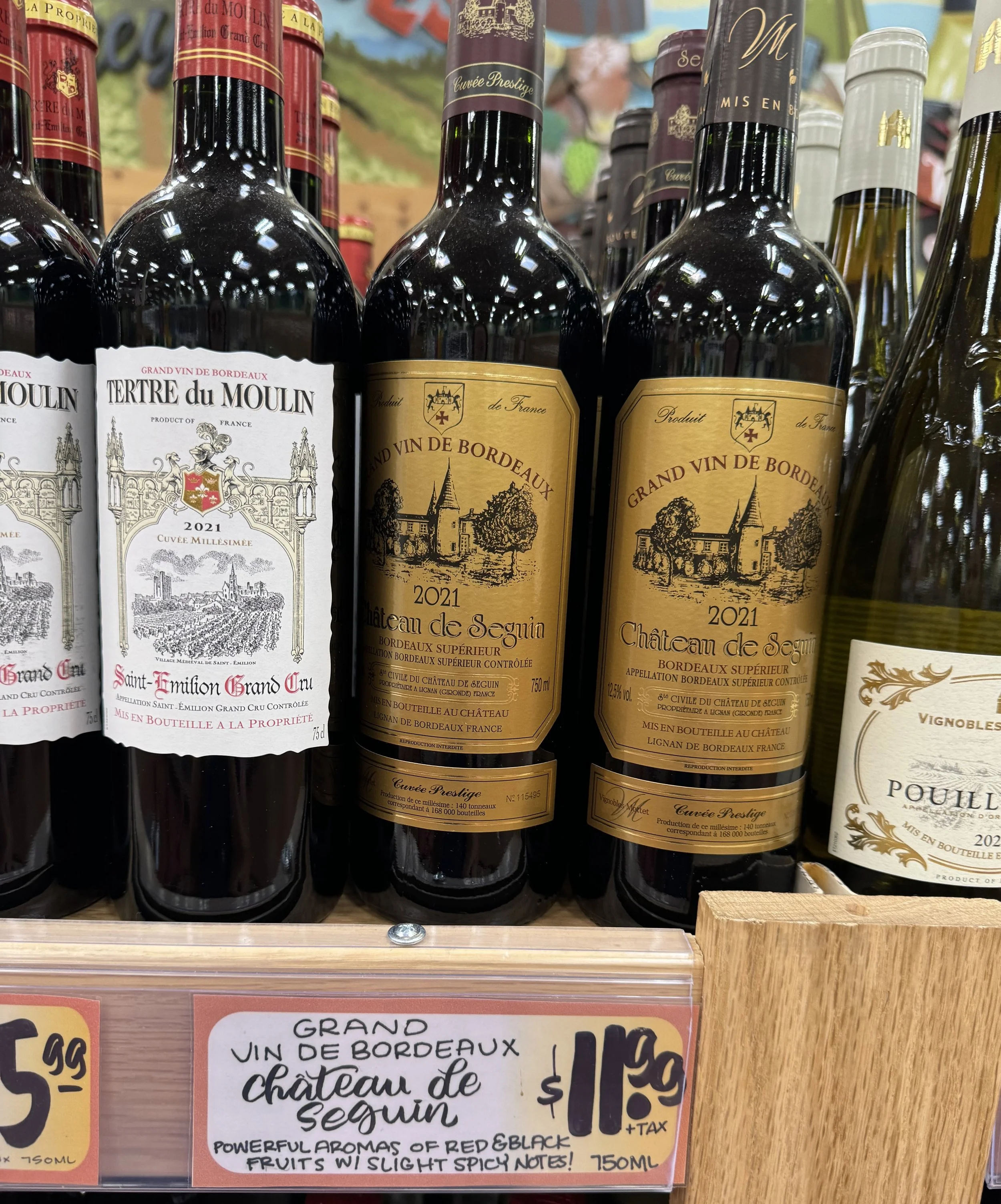
There’s a very specific panic that happens in the wine aisle.
You’re going to a dinner party.
Or meeting someone’s parents.
Or bringing a bottle to someone who “really knows wine.”
And suddenly $18 feels risky… but $42 feels irresponsible.
So what actually makes a bottle “nice”?
Spoiler: it’s not the price tag.
Here’s how I think about it.
1. Stop Equating Expensive With Better
Price does not equal quality.
Price equals:
Import costs
Marketing
Distribution layers
Fancy packaging
Region reputation
There are phenomenal $15 bottles.
There are deeply disappointing $50 bottles.
Take sparkling wine as an example. Many people assume Champagne is automatically the “nicer” option — but that’s often just brand perception. In reality, I buy Cava more often than Champagne for both value and quality. (You can read my full breakdown on that here: Why I Buy Cava More Often Than Champagne.)
If you want to look thoughtful, not flashy, focus on what’s inside, not the number.
2. Region Matters More Than Grape (Most of the Time)
If you don’t know what to buy, don’t start with the varietal.
Start with the region.
Certain regions consistently overdeliver for the price:
Southern France (Pays d’Oc, Languedoc)
Spain (especially for sparkling like Cava)
Chile (Carmenere is wildly underrated)
Southern Italy (Puglia, Sicily)
These areas don’t have the prestige pricing of Napa or Burgundy, but the quality can be excellent.
That’s how you buy something that tastes elevated without paying for the zip code.
Speaking of wines hiding in plain sight... Mexican wine is one of the best values in the wine world right now. Bottles earning 93-point scores that most people have never heard of. Taste five of them, paired with food, at our Mexico Beyond the Margarita experience.
3. Look for Quality Clues on the Label
You don’t need to decode the entire label, but a few small cues can help:
“Reserva” or “Riserva” (often indicates aging standards)
Specific sub-regions vs. just the country
Vintage listed clearly
Alcohol between 13–14.5% (for many balanced reds)
You don’t need to overanalyze.
You just want signs that someone took time making it.
4. Buy Within Your Style — But Upgrade the Version
If you know you like Sauvignon Blanc, don’t suddenly grab a random orange wine to look impressive.
Instead:
Buy a more structured Sauvignon Blanc.
Choose one from Sancerre instead of a generic bottle.
Or pick one with a little oak influence for depth.
The “nice” part isn’t changing who you are.
It’s buying the slightly elevated version of what you already enjoy.
5. Ask One Good Question
If you’re in a decent wine shop, try this:
“I want something that tastes expensive but isn’t.”
That’s it.
Not:
“I need a full-bodied mid-palate structured wine with tertiary notes.”
Just ask for value.
Good wine retailers love this question.
6. My Honest Price Sweet Spot
For most dinner parties?
$18–$28 is the sweet spot.
That’s where quality, structure, and intention show up, without entering ego territory.
Above $35, you’re often paying for reputation.
Below $12, it becomes more variable.
Can you find gems outside that range? Of course.
But if you want a reliable rule of thumb, that’s mine.
The Real Secret
A “nice” bottle is one that feels intentional.
It doesn’t need to be rare.
It doesn’t need to be expensive.
It doesn’t need a story about a monk in 1482.
It just needs to taste balanced, thoughtful, and appropriate for the moment.
Wine isn’t impressive because it’s expensive.
It’s impressive when it’s chosen well.
It’s impressive when it’s chosen well.
And that?
Is very learnable.