
Published March 8, 2026. Updated September 10, 2026.
There is a grape sitting on the Trader Joe's shelf for about five dollars that most people walk right past, and it happens to have one of the better stories in wine.
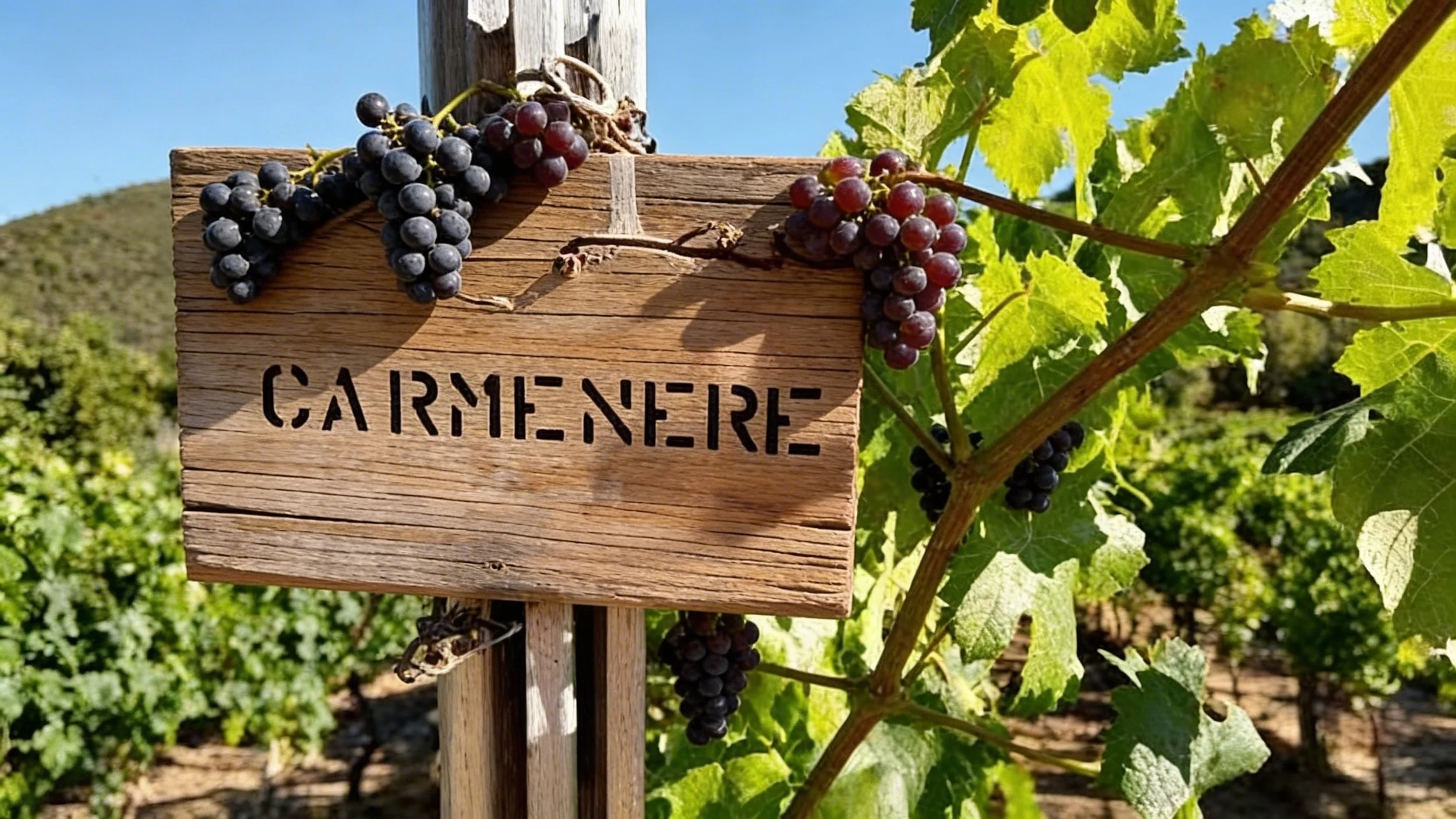
It is called Carménère, and it is a dry, medium-bodied Chilean red. If you have been looking for an inexpensive bottle that tastes like someone actually meant to make it, this is the one I keep coming back to.
The short version: Carménère is a dry Chilean red with black cherry, red cherry, and a green herbal note underneath. It is softer than Cabernet Sauvignon, more savory than Merlot, and at around $5 at Trader Joe's it outperforms nearly everything at its price.
What does Carménère taste like?
Carménère is a dry, medium-bodied red with dark fruit at its center, mostly black cherry and red cherry, and a green herbal note underneath that shows up as bell pepper or cracked black pepper depending on how ripe the fruit was. Most bottles spend some time in oak, which rounds it out and adds a little warmth, and the tannins stay soft enough that you can pour a glass with nothing else going on and be perfectly happy.
That herbal streak is the tell. It is the thing that separates Carménère from the Merlot it spent a century being mistaken for, and once you catch it you will never un-taste it.
Serve it slightly below room temperature, somewhere around 60 to 65 degrees, which for most kitchens means about twenty minutes in the fridge before you open it. It does not need decanting, though fifteen minutes in the glass softens that herbal edge if it comes on strong at first.
If you are still building your tasting vocabulary, the beginner guide to wine tasting walks through how to actually pick these notes out instead of nodding along and hoping.
Is Carménère dry or sweet?
Carménère is dry. Every Chilean Carménère you are likely to find at a grocery store is made in a dry style, meaning the sugar has been fermented out and what is left is fruit flavor rather than actual sweetness.
This confuses people, and reasonably so. Wines with big ripe fruit character often read as sweet even when they are bone dry, because our brains file "tastes like cherries" under sugar. Carménère leans into that ripe fruit, so it can feel generous and round without a gram of residual sugar in the glass.
If you want something genuinely sweet, this is not it. If you want something dry that does not feel austere about it, it is a good place to land.
The Bordeaux grape that Chile accidentally saved
Carménère started in Bordeaux, France, where it was one of the six permitted red grapes alongside Cabernet Sauvignon and Merlot. Then phylloxera, a root-feeding aphid, tore through European vineyards in the late 1800s, and Carménère was difficult enough to replant that French growers largely gave up on it.
Here is the part that makes the story: cuttings had already traveled to Chile in the mid-1800s, before the blight. They took root in the Central Valley and kept growing, and for well over a century nobody realized what they were. Chilean producers sold it, labeled it, and thought about it as Merlot.
That ended in 1994, when French ampelographer Jean-Michel Boursiquot identified the vines as Carménère while visiting Chilean vineyards. Chile formally recognized it as a distinct variety a few years later, and it has since become the country's signature grape.
Most of it grows in the Central Valley, particularly the Colchagua, Rapel, and Maule valleys, where long warm seasons give the grape the extra hang time it needs to ripen that green edge into something pleasant rather than aggressive.
How is Carménère different from Merlot and Cabernet Sauvignon?
If you already drink Merlot, Carménère will feel familiar but more savory, with a little more grip and that distinctive herbal note Merlot does not have. If you drink Cabernet Sauvignon, Carménère will feel gentler and rounder, without the firm tannic frame that makes young Cab seem like it is waiting for a steak.
| Grape | Body | Tannin | Signature note | Drinks well alone |
|---|---|---|---|---|
| Carménère | Medium | Soft | Green herbal, bell pepper | Yes |
| Merlot | Medium to full | Soft to medium | Plum, chocolate | Yes |
| Cabernet Sauvignon | Full | Firm | Blackcurrant, cedar | Better with food |
The century-long mix-up makes more sense once you see this. Carménère and Merlot genuinely do sit close together on the shelf of your palate, and in a blind pour with no herbal note showing, even trained tasters got it wrong for a hundred years.
What does Carménère pair with?
Carménère pairs best with food that has some char, spice, or savory depth, because the herbal note in the wine echoes green and roasted flavors on the plate rather than fighting them. Grilled meat, braises and stews, roasted peppers, mushrooms, and anything with cumin or smoked paprika all work.
The genuinely great pairing, though, is taco night. Carménère handles chili heat better than most reds because its tannins are soft, and the herbal streak sits beautifully next to cilantro, charred onion, and salsa verde.
It also holds up to cheese and charcuterie without needing anything fancy alongside it. If you are putting a board together, the wine night snack guide covers what actually works versus what just looks good on Instagram.
What "Reserva" means on a Chilean label
On a Chilean label, "Reserva" generally signals better fruit or more time in oak, but it is not a legally enforced quality tier the way it is in Spain or Italy. Treat it as a useful hint rather than a guarantee.
That is worth knowing in both directions. A Chilean Reserva is usually a step up from the same producer's entry bottle, and at the five dollar level that step is often the difference between forgettable and genuinely good. But it does not mean the wine cleared any particular bar, so let the producer and the region carry more weight than the word.
Labels are full of these half-signals, and knowing which ones mean something is most of the skill. The guide on how to read a wine label breaks down the five that actually tell you what is in the bottle.
Is the Trader Joe's Carménère actually good?
Yes, and specifically it is good in a way that has nothing to do with grading on a curve. It shows real black and red cherry fruit, a little oak on the nose, soft tannins, and enough structure to stand next to dinner instead of disappearing under it.
Panilonco Carménère from Chile’s Colchagua Valley. For about $4.99 at Trader Joe's.
The reason the value is there is not that someone is doing you a favor. Chile does not carry the prestige pricing France does, so you are paying for the fruit and the winemaking rather than for the address on the label. That is the whole trick, and it is why the smartest budget wines tend to come from regions that have not yet been discovered by people who like telling other people what they drink.
Frequently asked questions
Is Carménère dry or sweet?
Carménère is dry. Its ripe cherry fruit can read as sweetness, but the wine is fermented dry with no meaningful residual sugar.
What does Carménère taste like?
Black cherry and red cherry with a green herbal note underneath, usually described as bell pepper or black pepper, plus warmth from oak. Medium body, medium acidity, soft tannins.
Is Carménère similar to Merlot?
Yes, closely enough that Chilean growers mislabeled it as Merlot for over a century. Carménère is more savory and carries a herbal note that Merlot does not.
Where is Carménère from?
Originally Bordeaux, France. It nearly vanished there after phylloxera in the late 1800s and survived in Chile, where it was identified in 1994 and is now the country's signature grape.
What temperature should Carménère be served at?
Around 60 to 65 degrees Fahrenheit, which usually means about twenty minutes in the refrigerator before opening.
What food goes with Carménère?
Grilled meats, stews, roasted peppers, mushrooms, and Mexican food. It handles chili heat better than most reds thanks to its soft tannins.
How much does Trader Joe's Carménère cost?
Around $4.99, depending on location and vintage.
If you want to keep going
The most useful thing about a bottle like this is that it costs almost nothing to be curious. Buy two, pour them next to a Merlot you already like, and pay attention to what is different. That is a real tasting, and it costs about fifteen dollars.
If you would rather do it with a group and have someone else handle the pouring and the talking, that is what I do. Take a look at what a guided tasting looks like, or if you are hosting your own, the guide on hosting a wine tasting party without the fuss will get you most of the way there.
Either way, go grab the Carménère. Five dollars is not much of a risk, and the story alone is worth telling at your next dinner.