
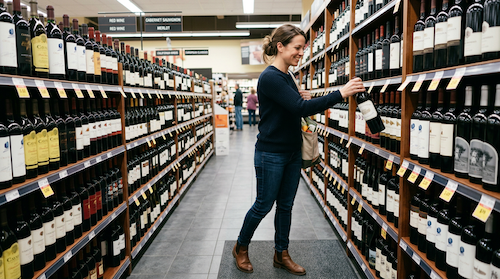
You walk into the wine aisle. There are 600 bottles. Some are $7. Some are $70. The labels look almost identical.
Sound familiar?
Here's the truth: most of what people think they need to know about wine is noise. You don't need a certification. You don't need a wine club membership. You don't need to have strong opinions about oak.
You need five things. That's it.
1. Price doesn't equal quality.
This one I'll keep saying until I'm out of breath.
A $9 bottle can genuinely blow your mind. A $60 bottle can taste like wet cardboard. The price of a wine reflects a lot of things that have nothing to do with how it tastes: the prestige of the region, the size of the marketing budget, the cost of the real estate the grapes grew on.
The sweet spot for most everyday drinking is $12–$25. That's where you find wines made carefully, by people who care, without paying for someone else's ego.
If you remember nothing else from this post, remember that.
2. The grape matters more than the brand.
People get loyal to wine brands the way they get loyal to a coffee chain. But wine isn't a chain. The same label can produce a stunning Cabernet and a forgettable Rosé. And brand consistency in wine? Not really a thing.
What stays consistent is the grape.
If you know you love Sauvignon Blanc, you can walk into any wine shop in the world and find one that suits you. If you know Malbec is your thing, you have a starting point anywhere. Once you start thinking in grapes instead of brands, the wine wall gets a lot smaller.
3. Region tells you the style.
Here's where wine starts to feel less random.
The shorthand worth knowing: Old World wines (France, Italy, Spain) tend to be more restrained, earthy, and food-friendly. New World wines (US, Australia, Argentina, New Zealand) tend to be more fruit-forward, ripe, and immediately easy to like.
Neither is better. They're just different. A bold California Cabernet and an earthy Burgundy are both excellent. They're excellent for different nights, different moods, different meals. Once you know roughly what to expect from a region, you stop buying blind.
4. Trust your palate over the scores.
A 92-point wine isn't a 92-point wine for you if you don't like how it tastes.
Critic scores measure one thing: how closely a wine matches what that particular critic considers great. They're not measuring your kitchen, your Tuesday night, or your taste buds.
If you love big, jammy reds and someone hands you a highly-rated lean Bordeaux, you're going to be disappointed. That's not a you problem. The score just wasn't measuring for you.
Your palate is the only one that has to like what's in your glass.
5. Ask a better question.
Most people walk up to the wine person and ask, "What's good?"
That question is almost impossible to answer. It's like walking into a restaurant and asking what's tasty.
Give them something to work with instead:
“What's a great Spanish red under $20?"
“I'm cooking salmon tonight, what would you grab?"
"I want something crisp and not too dry."
Specific question, useful answer. The people who work at good wine shops genuinely love this stuff. Let them actually help you.
That's it. Five things.
Not memorizing regions. Not learning to detect notes of graphite and leather. Not pretending you've heard of the producer.
Just five real, usable ideas that make the wine aisle feel like less of a pop quiz.
If you want to go further, I put together a free guide that goes beyond these five things: how to read a bottle before you even flip it over, simple pairing guidelines (not rules), a quick-reference cheat sheet you can save to your phone, and a no-stress hosting formula for your next dinner party.
It's free. No expertise required.