
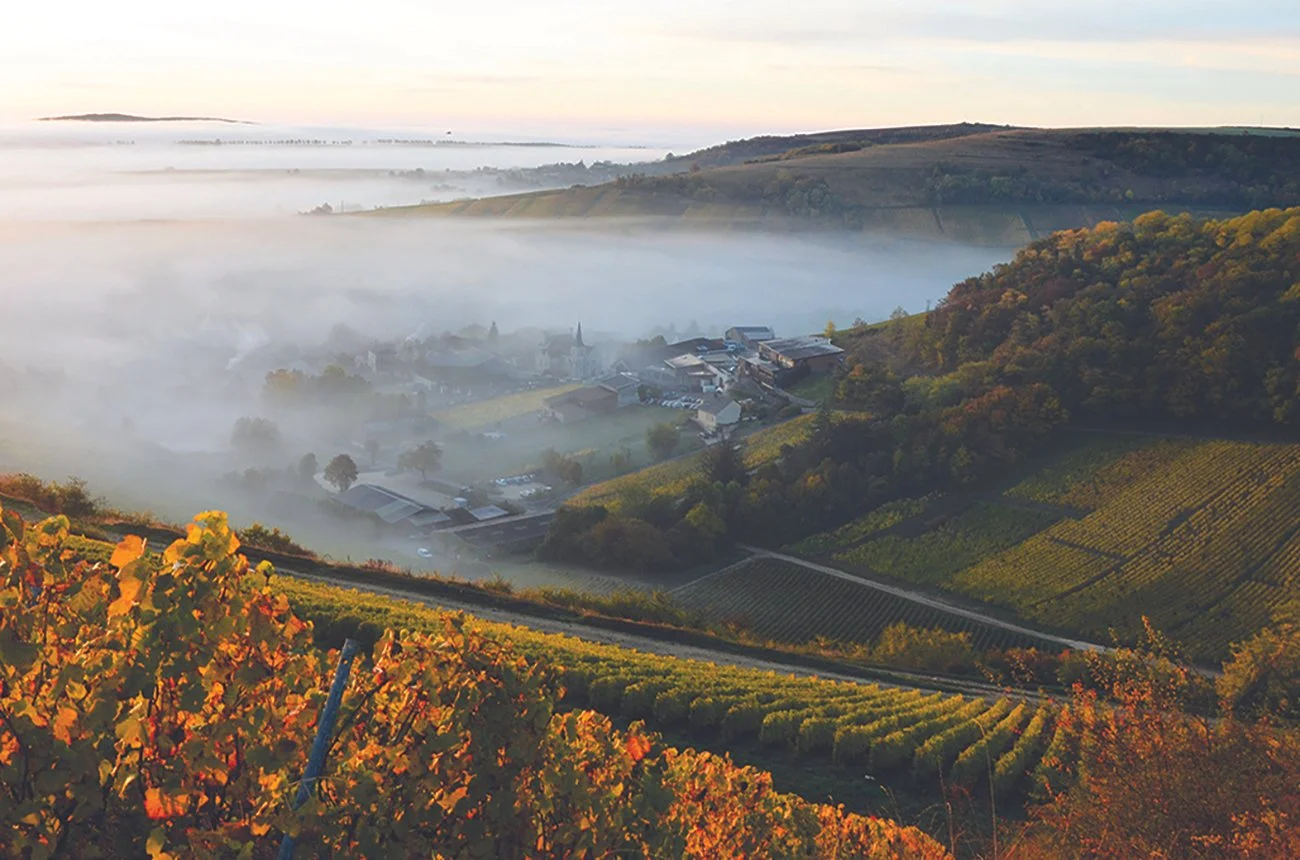
Loire Valley wine guide
Beyond Sancerre and Muscadet, a tour of the Loire Valley, one of France's most diverse wine regions.
If you've been following along, you've heard me talk about Sancerre, Pouilly-Fumé, and Muscadet. They're some of my favorite wines to recommend: crisp, mineral, incredibly food-friendly, and honest about what they are.
But here's what I haven't told you yet. Those three wines are just small pieces of one of the most diverse and exciting wine regions in the entire world.
The Loire Valley deserves a proper introduction.
A River Runs Through It (And That Changes Everything)
The Loire is France's longest river, about 630 miles of it cutting through the heart of the country. The wine region runs right alongside it, and the river isn't just a pretty backdrop. It's the reason these wines taste the way they do.
The Loire Valley has a cool continental climate: cold winters, mild summers, and morning fog that rolls off the water during the growing season. That fog and cool air slow ripening down significantly, and slower ripening means grapes hold onto their acidity and develop mineral character instead of going soft and tropical.
This is why Loire wines almost always have that bright, crisp, slightly chalky quality. It doesn't matter if you're drinking a white, a rosé, or a red. You're tasting the river and the climate in every glass.
The Wines, From West to East
The Loire Valley stretches far enough that it's almost easier to think of it as several regions that happen to share a river. Here's how to navigate it.
Muscadet: The Oyster Wine of the Atlantic Coast
At the western end, closest to the Atlantic Ocean, you'll find Muscadet. I did a full video on this one. It's one of the most food-specific wines in the world: saline, bone dry, and made for oysters and seafood. If you've ever been intimidated by what wine to order with a seafood tower, Muscadet is your answer every time.
The best bottles will say Sur Lie on the label, which means the wine spent time resting on the spent yeast after fermentation. It adds a subtle creaminess and complexity that makes it feel like a much more expensive wine than it is.
Chenin Blanc: The Shapeshifter
Move inland toward the Anjou and Touraine areas, and the white grape changes. Chenin Blanc takes over here, and it's one of the most fascinating grapes in the world because of one thing: it shapeshifts.
The same grape, grown in the same region, can produce a bone-dry white, an off-dry style with a little sweetness, a beautiful sparkling wine, or even a rich, honeyed dessert wine, all depending on the vintage and how the winemaker chooses to work with it.
Look for Vouvray on the label. It's the most well-known Chenin Blanc appellation in the Loire, and it's worth exploring. If you see Sec, it's dry. Demi-sec means off-dry. Mousseux means sparkling. The label tells you exactly what you're getting.
Sancerre and Pouilly-Fumé: The Ones You Know
Further east, where the Loire curves through a landscape of ancient limestone and flint, you'll find the two appellations you've already heard me talk about: Sancerre and Pouilly-Fumé.
Both are 100% Sauvignon Blanc. Both sit on opposite banks of the same river. And both have that signature minerality that makes them so different from a New Zealand or California Sauvignon Blanc, which makes sense because the cool climate and flinty soil here couldn't be more different from those warmer growing regions.
The flint, by the way, is where Pouilly-Fumé gets its name. Fumé means smoky in French, a nod to the chalky, almost smoky finish you get from those ancient soils.
If you want the deeper dive on either of these, I've covered them both on my Instagram. But the short version is: if you see either one on a menu or a shelf, you're in good hands.
The Reds: The Loire's Best Kept Secret
Here's what most people don't know. The Loire Valley makes some of France's most interesting red wine, and almost nobody talks about it.
The grape is Cabernet Franc, and if your only reference point for Cab Franc is a supporting role in a Bordeaux blend, you're about to have your mind changed.
In the Loire, Cabernet Franc is the star. The appellations to know are Chinon and Bourgueil, both in the Touraine area. The wines are lighter in body and lower in tannin than what you'd expect from a Cabernet: more savory, more earthy, with red fruit and a slight herbaceous quality that makes them incredibly food-friendly.
Here's my pitch for Loire Cab Franc in the summer: chill it slightly. The same logic that applies to Beaujolais applies here. A lighter red with 20 minutes in the fridge is one of the most refreshing things you can drink with grilled food, a charcuterie board, or a casual dinner outside.
It's also almost always more affordable than its Bordeaux counterparts, which means you can explore without committing to a big bottle.
How to Start Exploring
If you're new to the Loire, here's the order I'd recommend.
Start with a Sancerre or Pouilly-Fumé if you haven't already. You'll get the region's signature cool-climate character in its most recognizable form. Then try a Muscadet with seafood. Then pick up a Vouvray and pay attention to whether it's dry or off-dry. And when you're ready for something different, find a Chinon or a Bourgueil and chill it slightly before you open it.
The Loire Valley is one of those regions that rewards curiosity. Every bottle you try opens a door to something else.
And the best part? You're already further along than you think.