
South African wine tasting notes
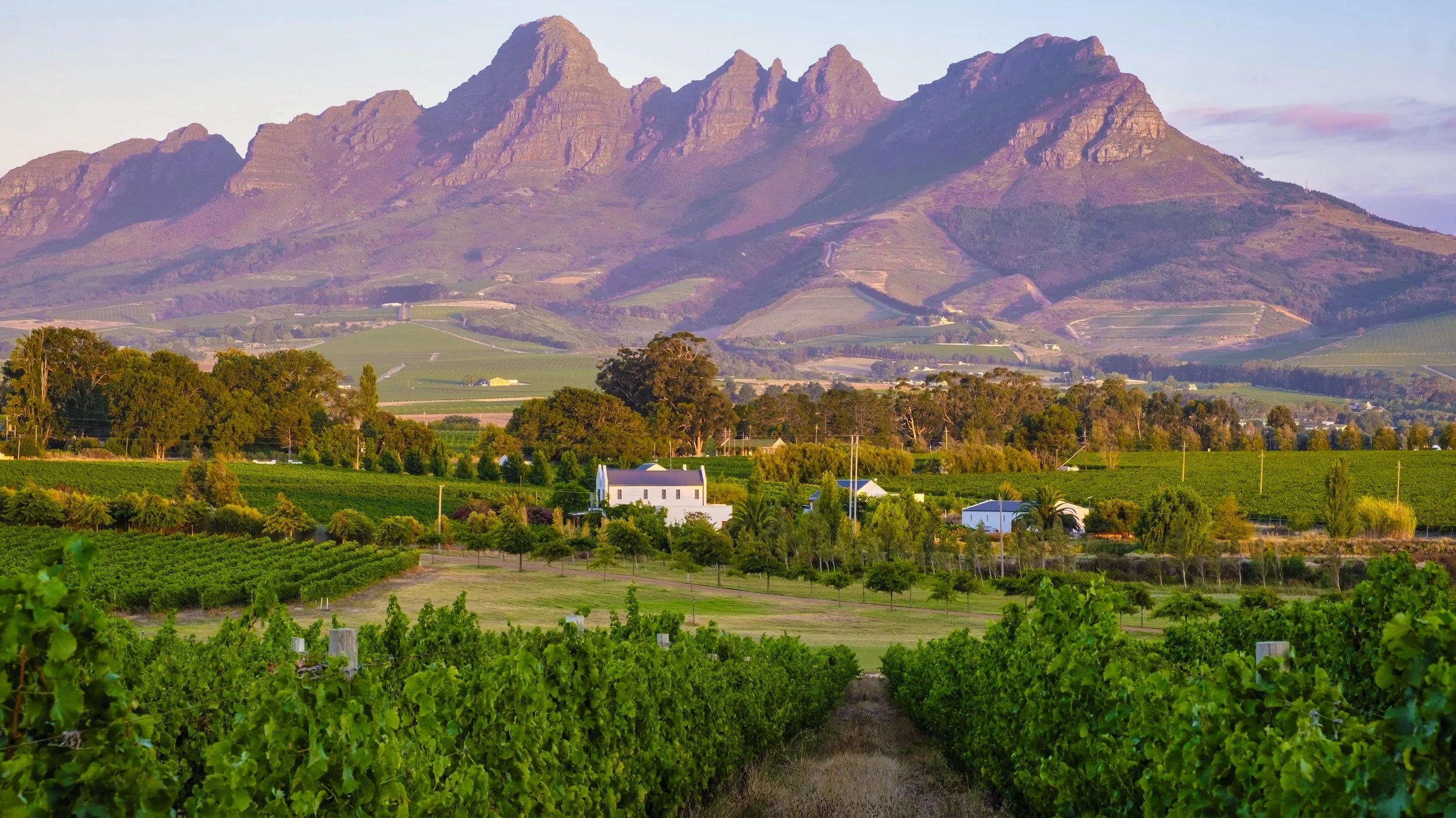
Stellenbosch vineyard at sunset, from a Wines of South Africa tasting featuring Cap Classique and old-vine Chenin Blanc.
A field report from the Wines of South Africa tasting in Austin, TX
I'll be honest: before this week, South African wine occupied a small, slightly fuzzy corner of my mental wine map. I knew Pinotage existed. I knew Stellenbosch was a place. I had a vague sense that there were some good Chenin Blancs out there. That was about it.
Then I spent an afternoon at the Wines of South Africa tasting here in Austin, talking to importers, sommeliers, and a few of the winemakers themselves, and I walked out completely rearranged.
If you're someone who likes to drink curiously but you've been overlooking the South African shelf at your wine shop, this one's for you. Here's everything I learned, plus what to actually look for the next time you're shopping.
1. The Ocean Is Doing Half the Winemaking
The single most important thing to understand about South African wine isn't a grape or a region, it's a cold ocean current.
The Benguela Current flows up the Atlantic coast from Antarctica, dragging frigid water past the southwestern tip of Africa. That cold water cools the air above it. That cool air rolls inland over the vineyards of the Western Cape every afternoon. And that is why South African wines, despite being grown under the bright African sun, manage to retain their freshness, acidity, and elegance.
Without the Benguela, the wines would taste baked and flabby. With it, they have lift and tension.
When a South African winemaker talks about "maritime influence," this is what they mean. It's not poetic flourish, it's the engine of the whole show.
2. The Two Regions You Actually Need to Know
The Western Cape has a lot of sub-regions. You don't need to memorize them all. Start with two:
Constantia sits on the Cape Peninsula, basically a suburb of Cape Town. It's small, historic (winemaking here dates to the 1680s), and very cool-climate thanks to that maritime influence from both sides of the peninsula. Think crisp Sauvignon Blanc, elegant Bordeaux-style reds, and one of the world's great sweet wines (Klein Constantia's Vin de Constance, if you want to fall down a rabbit hole).
Stellenbosch is about an hour east, warmer, sunnier, mountainous, and the engine room of South African wine. This is where you find structured Cabernet Sauvignon, brawny Bordeaux blends, serious Pinotage, and increasingly excellent Syrah. If South Africa has a "Napa," this is it.
One does delicate. The other does structured. Both benefit from that ocean breeze, just in different doses.
3. It's Not Just Pinotage (And Pinotage Itself Is Worth Another Look)
Pinotage is South Africa's signature grape, a homegrown 1925 cross of Pinot Noir and Cinsault that you basically can't find anywhere else in the world. It has a polarizing reputation (some people love its smoky, brambly intensity; others find older-style versions a little rustic). Modern Pinotage is much fresher and more elegant than its reputation suggests, and it's worth revisiting if you wrote it off years ago.
But here's the bigger story: South Africa is quietly having a Bordeaux moment.
Cabernet Sauvignon, Merlot, Cabernet Franc, Petit Verdot, the classic Bordeaux varieties, are thriving in Stellenbosch and Constantia. Bordeaux-style blends were actually what first put South Africa on the world wine map decades ago, then fell out of fashion while Chenin Blanc and Pinotage stole the spotlight. They're coming back now, better than ever, and the critics are paying attention again.
The translation for the wine aisle: if you like a structured, age-worthy Bordeaux or a serious Napa Cab, you should be trying South African Bordeaux blends right now. The quality-to-price ratio is borderline absurd.
4. Shiraz vs. Syrah: Same Grape, Coded Differently
This one's a small piece of insider knowledge that pays off every time you shop.
Shiraz and Syrah are the same grape. Genetically identical. But by convention, winemakers around the world choose which name to put on the label to tell you what style of wine is inside.
Shiraz signals New World style: riper, bolder, fuller-bodied, jammier fruit, higher alcohol, often aged in American oak. Think Australian Barossa.
Syrah signals Old World / Rhône-leaning style: leaner, peppery, savory, more floral, higher acid, cooler-climate, often French oak. Think Northern Rhône.
There's no legal definition. It's a stylistic wink from the winemaker to you. And South Africa is one of the most interesting places in the world to explore this right now, because winemakers there use both names intentionally, depending on what they made.
Practical takeaway: next time you see "Syrah" on a South African label, expect something more elegant and peppery. "Shiraz"? Expect richer and rounder. Both are great. Just know what you're picking up.
5. The Best-Kept Sparkling Secret: Methode Cap Classique
If you love Champagne but not the Champagne price tag, stop reading and go buy a bottle of Methode Cap Classique right now.
Methode Cap Classique (MCC, or just "Cap Classique") is South Africa's traditional-method sparkling wine. It's made the exact same way as Champagne, second fermentation in the bottle, aged on the lees, and hand-disgorged. The only reason it can't be called Champagne is that "Champagne" is a legally protected name reserved for that one specific region in France.
So in 1971, a winemaker at Simonsig in Stellenbosch made South Africa's first traditional-method sparkler and called it "Kaapse Vonkel" (Cape Sparkle). The category was born, and there are now over 250 producers making MCC.
Think of it as South Africa's answer to Cava (Spain), Franciacorta (Italy), or Crémant (France) — all of which use the Champagne method but can't use the name. Cap Classique sits in that same family, often at remarkable prices.
Look for "MCC" or "Cap Classique" on the label. $20-$30 gets you something that genuinely rivals $60-$80 Champagne.
6. Some of These Vines Are Really, Really Old
Here's a thing I didn't know: South Africa has a formal organization — the Old Vine Project — that certifies vineyards 35 years and older as "Certified Heritage Vineyards." Wines made from those vineyards can carry a special CHV seal on the bottle.
Why does this matter? Old vines produce less fruit, but the fruit they do produce is more concentrated, more complex, and more expressive of the place it grew. Old-vine wines tend to be deeper, more layered, and more singular.
Old-vine Chenin Blanc, in particular, is something South Africa does better than anyone else in the world. There are 40-, 50-, and even 60-year-old Chenin vineyards in Swartland and Stellenbosch making wines that drink like grand cru Burgundy at one-fifth the price.
Spot the CHV seal on the back label. It's a signal of patience, place, and quality.
7. The Price-to-Quality Ratio Is, Frankly, Unreal
Here's the thing nobody wants to say too loudly because they want to keep the prices low for themselves: South Africa is one of the best value wine regions in the world right now.
Yes, there are premium icons, Vilafonté, Kanonkop's Black Label, Mullineux, Sadie Family, that command serious money and deserve every penny. But the everyday shopping aisle is where it gets exciting. In the $15-$25 range, you can find:
Old-vine Chenin Blancs that drink like $50 white Burgundy
Bordeaux-style reds that punch well above their weight
MCC sparkling that rivals $60 Champagne
Pinotage and Cinsault from world-class producers
The reason? South Africa is still flying a little under the global radar compared to Napa, Bordeaux, or Burgundy. The wines haven't been bid up yet. That's the window of opportunity, and it won't last forever as the world catches on.
What to Actually Buy
If you want to put this into practice on your next wine shop run, here's a simple starter strategy:
One white: Old-vine Chenin Blanc from Stellenbosch or Swartland (~$20)
One red: A Stellenbosch Bordeaux blend or a cool-climate Syrah (~$25)
One sparkling: Any Methode Cap Classique you can find (~$22)
One wildcard: Modern Pinotage from a respected producer — give the grape another shot (~$20)
Total damage: under $90 for four bottles that will rearrange how you think about South African wine.
Bring them to a dinner. Pour them blind for friends. Watch faces change.
That's exactly what happened to me this week. Now it's your turn.