
Small winery marketing clarity
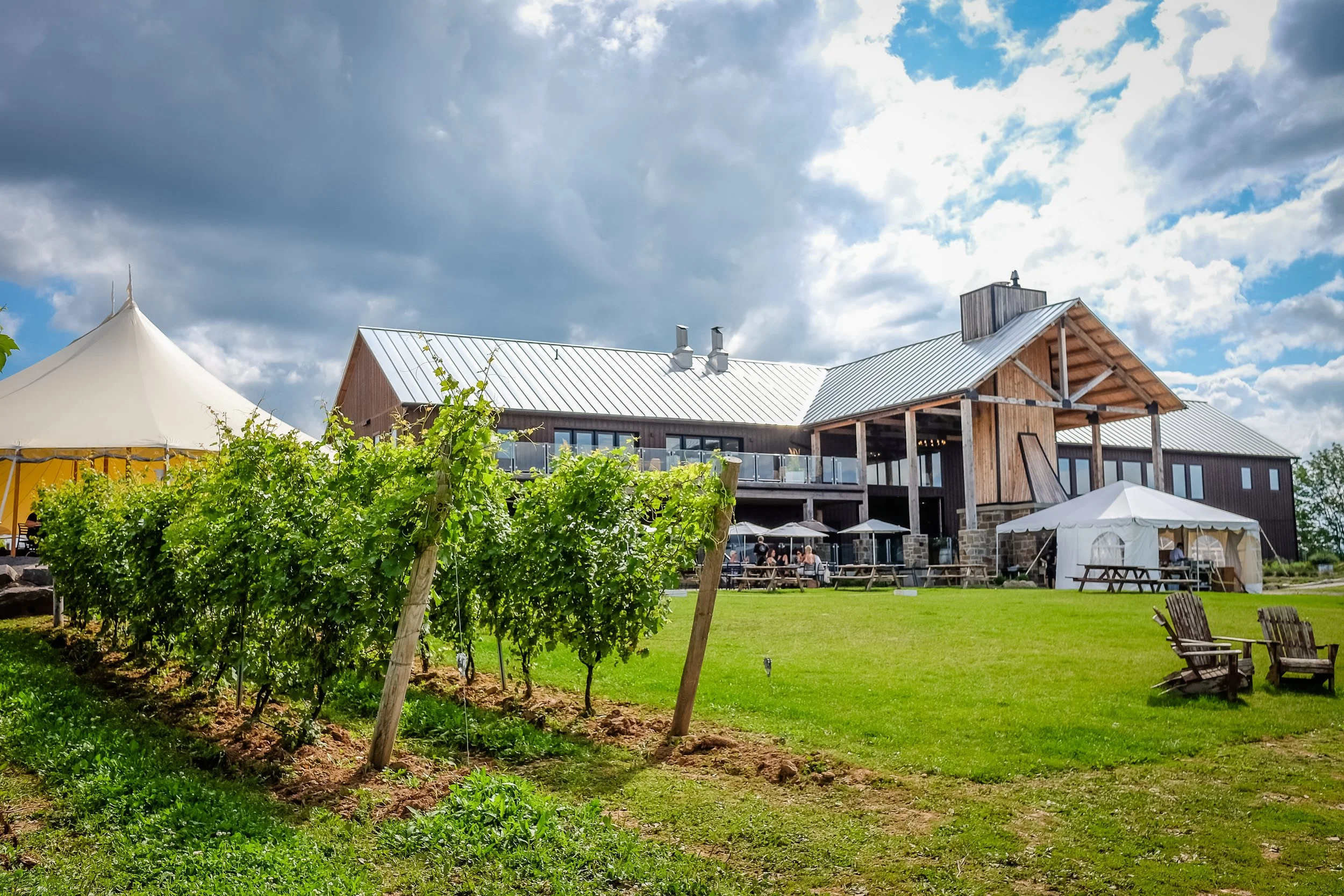
A small winery event space, where clear brand messaging sells more wine than any new distribution deal.
Walk into any independent wine shop, and you'll see it: shelves packed with small-production bottles from passionate winemakers, most of them gathering dust while the same handful of recognizable labels move out the door. The instinct is to blame the distribution. If we could just get the wine in front of more people, the thinking goes, the rest would take care of itself.
But the wine is already in front of people. That's not the problem.
The problem is what happens in the three seconds after someone picks it up.
The issue isn't getting noticed. It's getting understood.
A shopper grabs your bottle. They turn it over. They scan the label. Then they hit a wall of information they don't know how to interpret, an unfamiliar region, a varietal they can't pronounce, a tasting note about minerality and tertiary aromas. They put it back down and reach for the one with the cute animal on the front.
This isn't a failure of taste. It's a failure of translation.
Confused customers don't convert. That's true in software, in retail, and yes, in wine. Every additional second a shopper spends trying to figure out what your bottle is is a second they're not deciding to buy it.
Three reasons small wineries lose the shelf
1. Too much complexity, too fast
Wine has more jargon per square inch of label than almost any other consumer product. Regions inside regions. Grape varietals most people have never heard of. Vintage variation, alcohol content, residual sugar, and aging vessels. Each piece of information is meaningful to someone, usually the winemaker. To the average shopper, it's noise. And when people encounter noise, they don't lean in to decode it. They shut down and move on.
2. The messaging is inward-facing
Most small-winery labels and websites are written from the winemaker's point of view. Our estate, our soil, our family's fourth-generation commitment to traditional methods. That story matters, but it matters to people who already care. For the shopper standing in front of the shelf trying to figure out what to bring to dinner, none of it answers the question they're actually asking: will I like this, and is it right for tonight?
3. No clear "why this bottle?"
When every wine on the shelf claims to be hand-harvested, small-batch, and expressive of its terroir, none of those words do any work anymore. If everything sounds special, nothing stands out. The shopper isn't comparing your wine to a generic competitor; they're comparing it to nine other bottles making the exact same claims, in roughly the same font.
Education isn't the answer. Clarity is.
The wine industry has been trying to address this through education for 40 years. Tasting classes, certifications, sommelier-led tours, and QR codes linking to vineyard videos. The results have been modest because the underlying assumption is wrong. The assumption is that if people just knew more, they'd buy more.
They wouldn't. They'd just be more tired.
You're not competing on quality. You're competing on understanding. The bottle that wins is the one the shopper can make sense of fastest, not the one with the deepest story or the highest score.
What clarity actually looks like
This is where the work happens. Three practical shifts:
Simplify the label. Tell people what it tastes like, in language a normal person uses. Tell them when to drink it. "Crisp, citrusy, made for a Tuesday night patio" beats "exhibits notes of Meyer lemon, white pepper, and wet stone" every single time, not because the second is wrong, but because the first is useful.
Lead with occasion, not technical detail. Pair the wine with a moment, not a flavor profile. Pizza night. Anniversary dinner. The bottle you bring to your in-laws. An occasion gives the shopper a place to slot the wine into their actual life. Technical details ask them to do homework first.
Make the first decision easy. If a shopper has to choose between twelve of your SKUs, you've already lost. Pick the one bottle that's the easiest entry point and make it impossible to miss. Once they're in, they'll come back for the rest.
The wineries that win
The wineries that win the next decade won't be the ones who explain more. They'll be the ones who make choosing feel effortless.
Clarity isn't dumbing it down. It's doing the translation work yourself, so the shopper doesn't have to.