
Italian wine culture and community
Sharing Italian wine with friends, because the future of wine is about connection, not complication.
There are a lot of ways people try to explain wine.
Regions. Grapes. Tasting notes. Rules.
Most of them are meant to make things clearer.
And somehow, they often do the opposite.
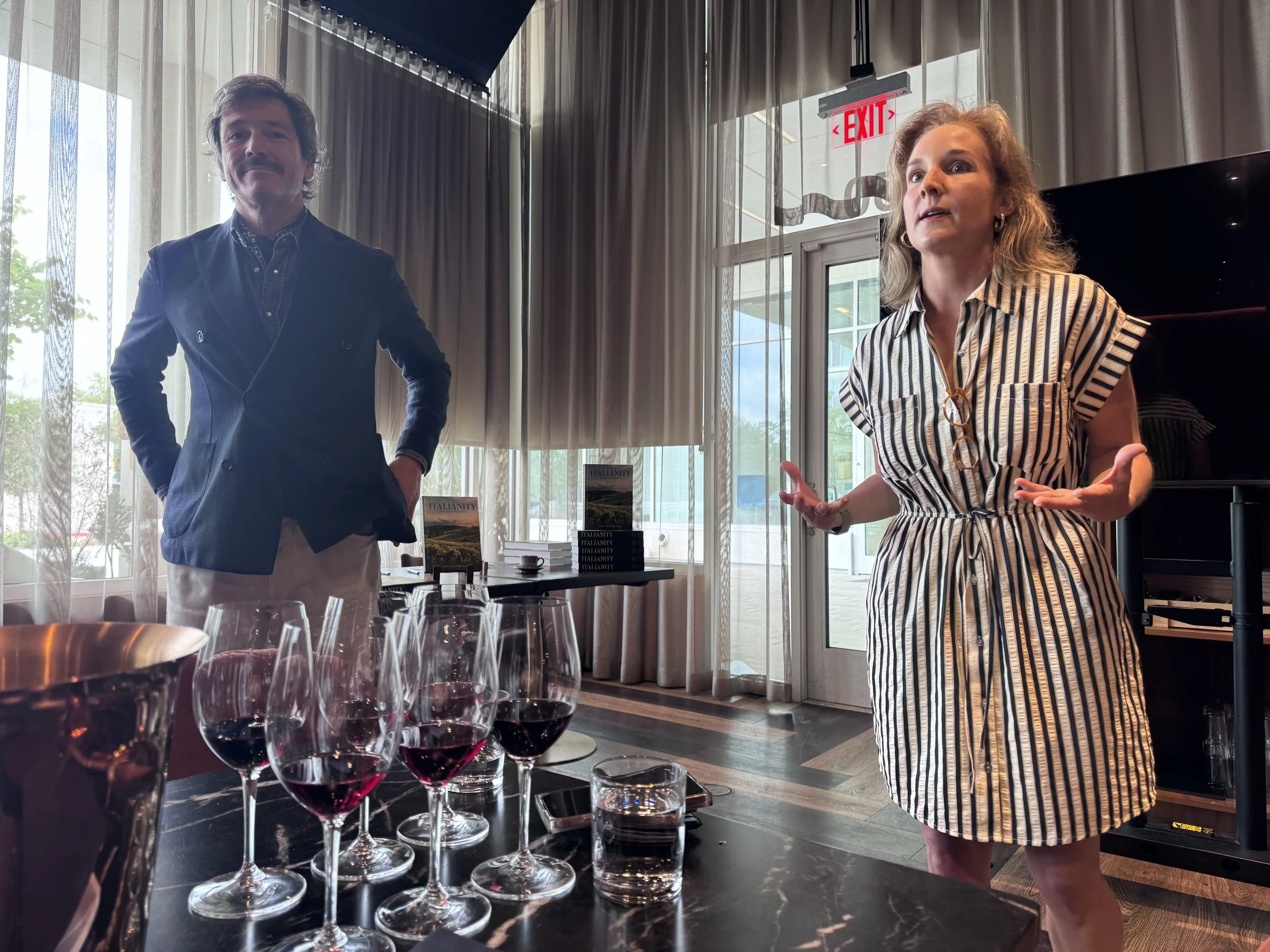
I recently attended a masterclass built around a new book, Italianity, by Andrea Lonardi , MW and Jessica Dupuy, and it introduced a different way of thinking about wine that felt… simpler, but also much deeper.
Not more information.
A different lens entirely.
Italianity Isn’t a Word—But It Explains a Lot
“Italianity” isn’t really an English word.
It comes from the Italian idea of Italianità, something closer to “Italian-ness.” Not just what something is, but how it feels, where it comes from, and what shaped it.
And in wine, that distinction matters more than most people realize.
Because in many parts of the wine world, there’s a model.
A clear expectation.
You can point to something like Marlborough Sauvignon Blanc or a classic Bordeaux and say: This is what it’s supposed to taste like.
There’s a blueprint.
Italy doesn’t really work like that.
There Is No Single Way to Make Italian Wine
What Andrea and Jessica kept coming back to is this:
Italy isn’t organized around uniformity.
It’s organized around culture.
Not just regional culture, but often something even more specific.
A hillside.
A village.
A vineyard that’s been worked the same way for generations.
The result is that two wines made from the same grape, in the same general area, can feel completely different, and both be exactly right.
Because they’re not trying to match a standard.
They’re expressing where they come from.
The “Red Spine” That Runs Through Italy
One of the more interesting ideas they shared was what Andrea described as the “red spine” of Italian wine.
A kind of through-line that runs from the Alps all the way down to Sicily.
Not a single style, but a shared identity.
Structure. Acidity. A sense of place.
It shows up differently depending on where you are, but it’s there.
And once you start to notice it, it becomes easier to understand Italian wine not as a collection of regions, but as a connected system of culture.
Some Wines Are Built. Others Are Understood.
They described Barolo as the orchestra of wine.
There are a lot of moving parts. Timing, structure, coordination.
And if you’re a skilled winemaker, you can step in and create something beautiful. It’s complex, but it’s also responsive.
Then there’s Sangiovese.
Which Andrea called the thoroughbred.
You don’t just walk in and make great Sangiovese, even if you know what you’re doing.
It requires time. Familiarity. A relationship.
It has to be understood, not just executed.
That distinction stuck with me.
Because it challenges the idea that great wine is just about skill.
Sometimes, it’s about patience.
A Quiet Shift: White Wine Is Entering the Conversation
For a long time, Italy’s reputation has leaned heavily red.
But there was a clear sense, especially from Andrea, that this is changing. And as one of four Masters of Wine in Italy, he knows a thing or two about the future of Italian wine.
That white wines are starting to claim a more serious place in the “fine wine” conversation.
We tasted a wine that made that point hard to ignore: Pietra Marina Etna Bianco Superiore.
What stood out wasn’t just the flavor, it was the intention behind it.
At the end of harvest, they clip part of the grape clusters to concentrate the remaining fruit.
The vines are older. The approach is deliberate.
And the goal isn’t just to make a good white wine.
It’s to make one that can age. One that evolves. One that belongs in the same conversation as wines people typically reserve for cellaring.
That’s a different mindset, and it shows.
Wine That Tastes Like Where It Comes From
Andrea also shared what he’s building himself with his project, Officina del Vento.
It translates loosely to “Garage of Wind,” which makes sense when you hear where it is—on the coast of Sicily, near Marsala, where the salinity in the air is impossible to ignore.
He’s working with Grillo grapes.
Small production, around 1,000 cases a year.
But what stood out wasn’t the scale.
It was the idea that the wine is shaped as much by the environment as it is by the winemaker.
The wind. The salt. The exposure.
Not controlled, incorporated.
Why This Matters More Than It Seems
At one point, the conversation turned to something unexpected: Texas.
The comparison wasn’t about style, it was about mindset.
There’s a similar sense of something still being defined.
Still evolving.
Still rooted in place, but not fully standardized.
And that’s where the idea of “Italianity” starts to feel less like a concept about Italy, and more like a way of thinking about wine in general.
The Future of Wine Might Be Culture
The central idea behind Italianity is simple:
The future of wine isn’t just about technique or trends.
It’s about culture.
Where something comes from.
How it’s made.
What shaped it, over time.
And maybe more importantly, how that story comes through in the glass.
Sometimes You Understand It Better From the Outside
One of the more subtle reflections from both Andrea and Jessica was this:
Sometimes, you don’t fully understand your own culture until you step outside of it.
Distance creates perspective.
And in a way, that’s what this entire conversation felt like.
Not just an explanation of Italian wine, but a reframing of how to approach wine at all.
Less about memorizing.
Less about getting it “right.”
And more about paying attention to where something comes from, and letting that be enough.
Because Not Everything Needs a Blueprint
For a long time, wine has been explained as something you learn.
Regions. Rules. Systems.
But what this made clear is that some of the most interesting wines don’t follow a model.
They reflect something more specific.
More human.
More tied to place than process.
And once you start looking at wine that way, it becomes a lot easier to understand.
Not because it’s simpler.
But because it’s more honest.