
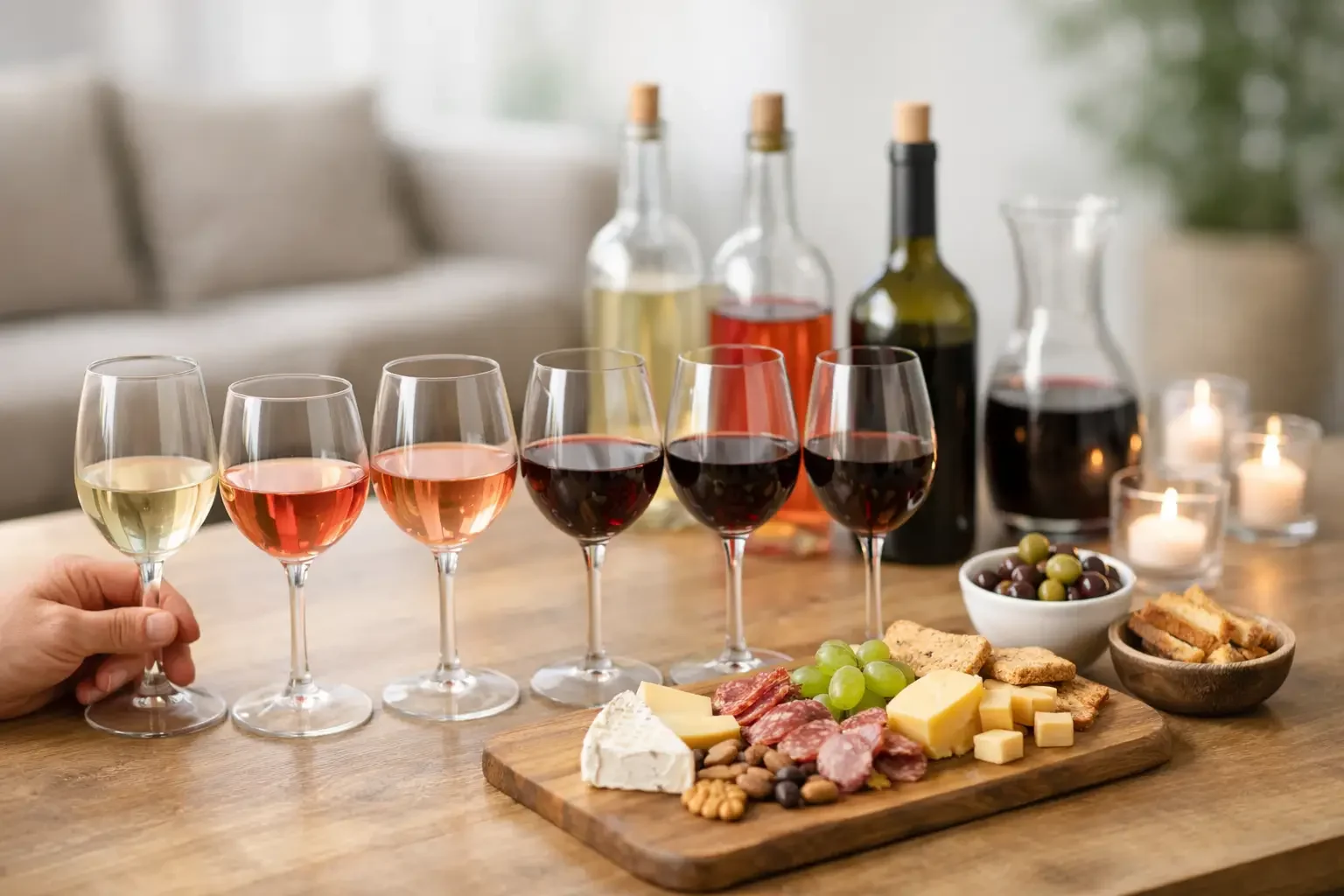
A memorable tasting does not require a cellar full of rare bottles, a lecture on soil types, or guests who can pronounce every French village. It requires a little structure, good hospitality, and permission for everyone to have an honest opinion. If you are wondering how to host a wine tasting party, start there: make it feel like a gathering first and a class second.
The best wine tastings give people a useful way to notice what they like. Someone may leave loving peppery Syrah. Someone else may decide bright, dry Riesling is their new dinner-party bottle. Both are excellent outcomes.
Decide what kind of tasting you are hosting
Before you buy anything, choose one clear idea. A theme gives the evening shape and makes bottle shopping far less stressful. It also keeps guests from comparing a delicate Pinot Noir to a big, buttery Chardonnay and wondering which one is supposed to “win.”
A comparison tasting is especially friendly for newer wine drinkers. Pour three Sauvignon Blancs from different places, for example, or taste Cabernet Sauvignon at three price points. You can also build an evening around a region, a grape, a season, or a food pairing. For a fall gathering, compare lighter and fuller reds. For a warm Austin evening, try crisp whites, rosé, and a chilled red.
Keep the concept simple enough to explain in one sentence. “We’re tasting wines from California, Oregon, and Washington” is plenty. You do not need to turn the invitation into homework.
Pick four to six wines
For most home tastings, four wines is the sweet spot. It creates variety without asking people to remember too much. Six can work for an engaged group or a longer evening, but beyond that, palates get tired and the room can get less focused.
Plan on roughly two ounces per person, per wine. A standard 750 ml bottle holds about twelve two-ounce tasting pours. One bottle of each wine is enough for up to ten or twelve guests if everyone is tasting, not filling a full glass. For eight guests and four wines, you will have a comfortable amount with a little room for a favorite wine to be revisited.
A thoughtful progression matters more than a rigid rule. In most cases, move from sparkling to still, white to red, lighter-bodied to fuller-bodied, and dry to sweet. But let the tasting make sense. If the point is to compare three Pinot Noirs, pour them side by side rather than forcing a sequence that hides the comparison.
How to host a wine tasting party without overcomplicating it
Set the table before guests arrive. Each person needs a glass, water, a small plate or napkin, and somewhere to set a phone or tasting sheet. Ideally, offer a fresh glass for each wine style, especially when moving from white to red. In real life, that is not always practical. One good all-purpose wine glass per guest works just fine if you provide a water pitcher or rinse station.
Avoid tiny plastic cups if you can. Wine smells and tastes more expressive in a glass with a bowl and a narrower opening, and guests will have an easier time swirling without wearing the tasting. If you are hosting outdoors or need something casual, durable stemless glasses are a reasonable compromise.
Keep bottles in the kitchen or on a sideboard, not crowded at the center of the table. This makes pouring easier and reduces the temptation for a well-meaning guest to top off everyone’s glass with a five-ounce “taste.” A small card in front of each bottle with the producer, grape, region, and vintage is helpful. It is also enough information to begin.
Serve whites and sparkling wines cold, but not painfully cold. Very cold wine can seem muted, so take whites out of the refrigerator about 10 minutes before pouring. Most reds show better slightly cool than room temperature, particularly in Texas. If your red has been sitting in a warm house, give it 15 to 20 minutes in the refrigerator.
Give guests an easy way to taste
You do not need to demonstrate a formal tasting ritual. A simple prompt helps people slow down without making them self-conscious: look, smell, taste, then decide whether you would want another glass.
Ask open questions rather than questions with a presumed correct answer. What does this smell like? Is it refreshing, rich, tart, smooth, fruity, savory, or something else? Does it remind you of a place, a food, or a season? “This smells like my grandmother’s rose garden” is more useful than pretending everyone should identify a specific note of cassis.
If you want a tasting sheet, keep it short. Include the wine name and room for three notes: what I notice, what I like, and what I would pair it with. That last prompt is practical because it moves the conversation from wine vocabulary to actual enjoyment.
Consider tasting blind for one or two wines. Cover the labels in a paper bag or pour bottles out of sight, then reveal them after guests have shared first impressions. Blind tasting is not a test. It is a gentle reminder that price, packaging, and familiar names can influence what we think we taste.
Build a food table that supports the wine
Wine tasting is more enjoyable when guests are not hungry, but a full dinner can make it harder to focus on the wines. Think generous snacks rather than a complicated meal. Bread or crackers, a few cheeses, olives, nuts, fruit, and something salty give people plenty to nibble between pours.
Try not to make every bite aggressively spicy, sweet, or acidic. Those flavors can make a dry wine seem harsher or flatter than it is. That does not mean you cannot serve tacos, barbecue, or a favorite Austin takeout spread. It just means those foods are often better after the structured tasting, when everyone can settle in with the bottle they liked best.
For cheese, keep it approachable. A creamy cheese, a firmer nutty cheese, and a blue or washed-rind cheese offer contrast, but two options are also enough. The goal is to create an easy landing place for the wine, not a cheese-board audition.
Water is nonnegotiable. Put it on the table, refill it often, and offer a nonalcoholic option that feels intentional, such as sparkling water with citrus. A dump bucket or discreet pitcher is considerate, too. Guests may want to taste every wine without finishing every pour, particularly if they are driving.
Keep the room comfortable, not performative
As host, your job is to guide the rhythm. Welcome everyone, explain the theme in a minute or two, and pour the first wine. Then let the room do some of the work. People learn more when they can compare reactions and ask ordinary questions without feeling corrected.
Share a few details about each wine, but do it after guests have tasted it. Start with the story: where it comes from, who made it, and why you chose it. Then add one or two useful facts, such as a grape’s natural acidity or a region’s cooler climate. Technical detail should clarify the glass, not take over the evening.
Be prepared for different levels of interest. One guest may want to discuss fermentation, while another simply wants to know which bottle to bring to a friend’s house. Both belong at the table. You do not need a certification before you are allowed to have an opinion about wine.
If a bottle is corked, oxidized, or simply not showing well, open another one if you have it. Do not turn a flawed bottle into a lesson unless the group is curious. Good hosting includes knowing when to move on.
End with a favorite, not a verdict
After the final pour, ask each guest which wine surprised them and which they would buy again. Those questions are more revealing than asking for the “best” wine. A $20 bottle that someone is excited to serve at their next dinner is a success.
Leave the last bottles open while people finish their snacks and conversations. The wine will change a little in the glass, and so will people’s impressions. That is part of the pleasure: wine gives a gathering something to notice together, without asking anyone to perform expertise.