
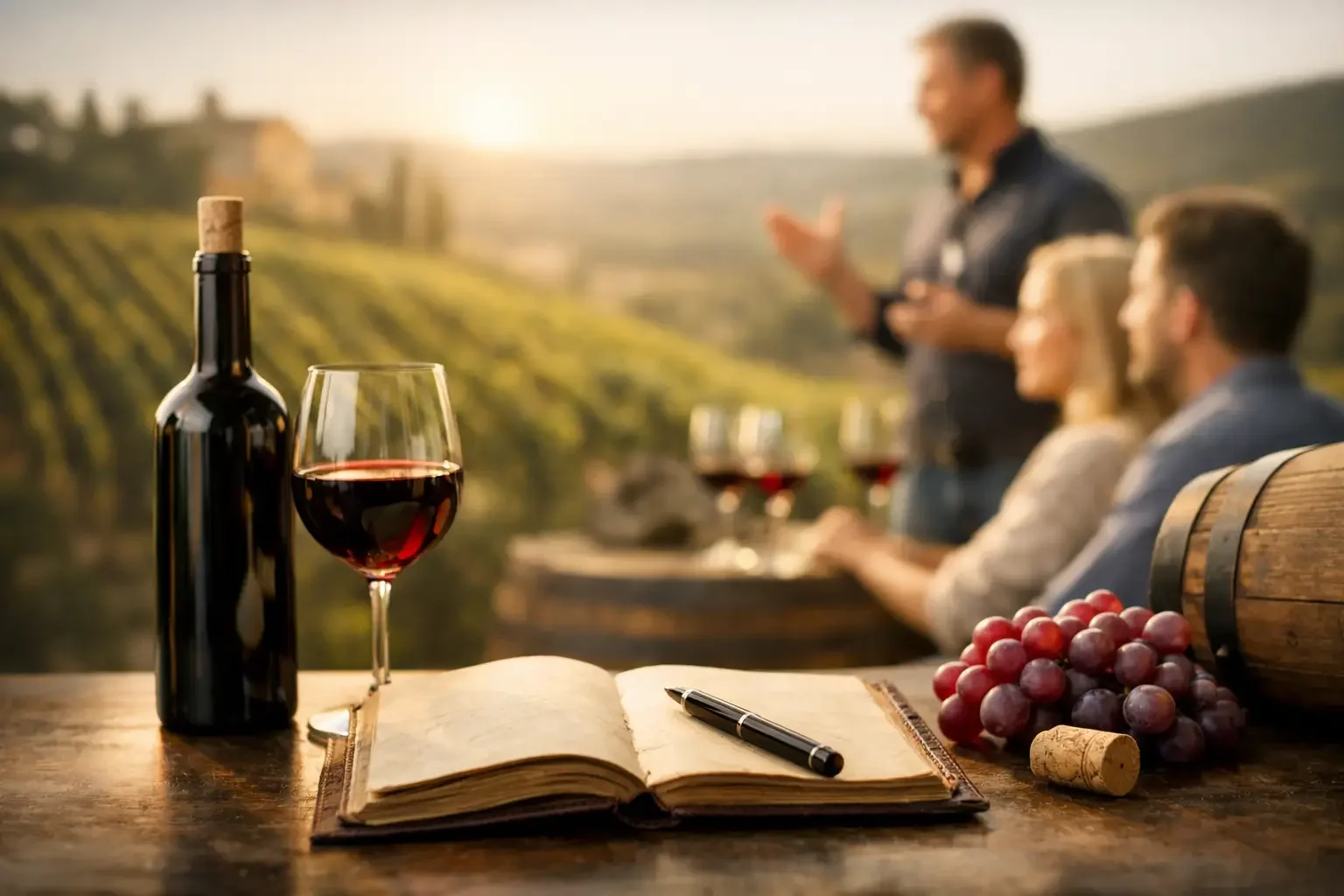
A wine bottle has only a few seconds to earn attention. Maybe it is sitting on a retail shelf beside 40 others. Maybe a distributor is deciding what to bring to a buyer. Maybe a guest at a tasting room is looking for a reason to care beyond a pretty label. Wine storytelling for brands gives people that reason.
The goal is not to make every bottle sound precious. It is to help the right people understand what makes a wine worth choosing, sharing, pouring again, and talking about later. A good story does not add drama where none exists. It makes the real meaning of a wine easier to see.
Why Wine Storytelling for Brands Matters
Wine is already full of facts: grape varieties, appellations, elevation, oak programs, vineyard blocks, soil types, fermentation choices, scores, vintages. Those details can matter, especially to knowledgeable buyers. But facts alone rarely create a connection.
Most people do not buy a bottle because it spent 14 months in French oak. They buy because the bottle feels right for a dinner, a gift, a weekend away, or the person they want to be when they bring it to the table. The technical details can support that decision. They are not always the decision itself.
That is where many winery messages lose people. They either lean so hard into romance that the story could belong to any winery, or they pile on production language that only an industry insider can decode. Neither approach gives a consumer a clear answer to a simple question: why should I care about this bottle?
A useful brand story gives the answer without talking down to anyone. It can make a first-time buyer feel welcome and give a wine director or distributor something credible to repeat. That balance is particularly valuable for small and mid-sized producers competing against brands with larger budgets and louder shelf presence.
Start With What Is Actually True
The strongest wine stories begin with substance, not a marketing exercise. Before writing a website headline or a back-label paragraph, get clear on the parts of the business that are genuinely distinctive.
That might be a family history, but only if it shapes how the winery operates now. It might be a site with a rare climate or farming challenge. It could be a founder's point of view, a regional mission, an unexpected route into wine, or a commitment to making a particular style that is increasingly hard to find.
The key is specificity. "Passion for quality" is not a story. Every winery claims it, and most people have learned to tune it out. "We farm a cold, wind-exposed site where Cabernet ripens slowly, so we make a lighter, more savory expression than people expect from this region" is a story with a point of view.
A practical way to find the material is to ask four questions:
What would be different about this wine if this winery did not exist?
What choices do we make that are harder, slower, or less obvious than the alternatives?
What do regular customers say they remember about us?
What do we want someone to understand after opening one bottle?
The answers may reveal that the story is not about heritage at all. Maybe it is about restoring an overlooked vineyard. Maybe it is about making serious wine for people who want to drink it on a Tuesday. Maybe it is about bringing a region into clearer focus. There is no prize for sounding like a classic European estate if that is not who you are.
Give the Story a Clear Point of View
A brand story needs more than a timeline. "Founded in 2014, planted in 2016, released our first vintage in 2019" is useful background, but it does not yet tell anyone what the brand believes.
Point of view is the thread that connects the details. It tells people what you are for and, sometimes, what you are not for. A winery might believe that great wine should be part of ordinary life, not saved for special occasions. Another may believe a lesser-known region deserves more attention than it gets. Another may be committed to transparent farming because the land is the source of everything in the bottle.
This does not mean turning every piece of copy into a manifesto. It means choosing language and stories that consistently reinforce the same idea. If the brand says it is relaxed and approachable, but every tasting room interaction is heavy on rules and correction, the message will not hold up. If a winery claims a site-driven identity but cannot explain what its site changes in the glass, customers will sense the gap.
Clarity also requires restraint. A winery can have many good stories, but it should not try to tell all of them at once. Choose one central idea, then let vineyard practices, winemaking decisions, people, and place serve that idea.
Turn Vineyard Details Into Human Meaning
Technical information should not disappear. It simply needs translation.
Instead of saying a vineyard has diurnal temperature shifts, explain what that means for the wine: warm days build flavor, while cool nights help hold onto freshness. Instead of leading with a clone number, explain why that planting decision creates a floral, peppery, or structured style. Instead of treating regenerative farming as a badge, show what it looks like in practice and why it matters to the land over time.
This is not about simplifying wine until it becomes generic. It is about respecting the audience enough to make the meaning clear. People are perfectly capable of appreciating nuance when someone gives them a useful way in.
The best explanation often follows a simple pattern: here is the choice, here is why we make it, and here is what you will notice when you drink the wine. That final part matters. It brings the story back to the glass, where every claim has to earn its place.
Make Room for the Customer in the Story
A brand story should not be a monologue about the winery. It should help customers imagine themselves in the experience.
For a tasting room guest, that may mean describing how a wine fits a meal or gathering, not just listing tasting notes. For a retail customer, it may mean giving them confidence that a bottle will work with grilled chicken, pizza, or a steak dinner without requiring an advanced degree in pairing. For a trade partner, it may mean offering a concise, repeatable story that helps their team sell the wine honestly.
This is where warm, plainspoken language has real commercial value. "A bright red for the person who usually reaches for Pinot Noir but wants a little more savory character" is more helpful than "medium-bodied, terroir-driven red blend." Both may be accurate. Only one gives a shopper a confident next step.
It also helps to remember that not every buyer wants the same story. A club member may want deeper access to the people and decisions behind a vintage. A restaurant buyer may need to know how the wine fits a list and what makes it easy to sell by the glass. A consumer at a grocery store may just need a memorable reason to take a chance. The core message should stay consistent, while the proof and detail adjust to the moment.
Where the Story Has to Show Up
A story is not finished when it appears on an About page. It needs to carry through the places where customers actually make decisions: the label, sales materials, tasting room script, wine club emails, distributor presentations, social content, and the words staff use when someone asks, "What should I know about this?"
Consistency does not mean repeating the same paragraph everywhere. It means the same promise feels recognizable across every touchpoint. If the brand is rooted in hospitality, its emails should sound hospitable. If it is built around an expressive site, the tasting experience should make that site understandable. If the wine is meant for gathering, the photography, language, and service should feel like an invitation rather than a lecture.
This is also where winery teams should be honest about capacity. A complex, highly produced content strategy may look impressive in a planning document, but it is not useful if no one can maintain it through harvest, bottling, and the daily work of running a winery. A smaller number of clear stories, told consistently and well, will outperform a dozen disconnected campaigns.
A Story Is Proven One Bottle at a Time
The most effective wine brand stories are not invented in a conference room. They are noticed in real conversations: when a guest repeats a phrase to a friend, when a retailer remembers why the wine is different, when a customer returns because the last bottle made dinner better.
That is the standard worth aiming for. Tell the truth with enough clarity that people can carry the story with them, then give them a wine that makes them glad they did.
If you read all of that and thought, we have a story in here somewhere, I just cannot get it into words, that is the most common place wineries land. It is also a good problem to have, because it means the substance is already there.
That is the work I do with small wineries. We start with what is actually true about your site, your choices, and your customers, then turn it into language your tasting room team, your emails, and your distributor can all use without translating it first.
If you would like help finding yours, take a look at how I work with wineries, or just get in touch and tell me about your wine. I would love to hear it.