
If you run a small winery, you've probably sat through your share of gloomy industry presentations: declining consumption, younger drinkers turning to seltzers and spirits, an oversupplied market. So here's a finding worth sitting up for. According to new Phase 1 results from the Wine Market Council's Wine Communication Study, presented in a July 7 webinar, consumers discuss wine more positively than almost every other beverage category. As Material+ researcher Stephen Lavender put it, "Wine's challenge is not negative perception."
The problem isn't that people don't like wine. It's that the industry keeps talking about wine in ways that push them away.
What the research actually found
The Wine Market Council partnered with consumer research firm Material+ to do something different from the usual survey: they listened. Using online anthropology and social listening across Reddit, Instagram, TikTok, and other platforms, the team analyzed how Gen Z, Millennial, and Gen X consumers talk about wine when nobody's asking them to. Unlike a survey, which puts pressure and expectation on the respondent, this approach captures what people say unprompted, in their own words, in their own spaces.
A few findings stand out for anyone running a tasting room or a wine club:
Wine has a visibility problem, not a likability problem. In online conversations, wine showed up in just 23% of beverage discussions, behind beer (41%) and spirits (32%). Yet wine earned the second highest net sentiment of any category. People who talk about wine tend to say good things. There just aren't enough of them talking.
Consumers want a working knowledge, not a wine education. "Expertise isn't what they're looking for," Lavender said of the average wine buyer. "They want a good enough working level of knowledge, so they scratch the surface and enjoy wine." Of the 13 conversation themes the researchers identified, basic wine information dominated at 93% of discussions. Topics the industry obsesses over, like quality perception (5%), barely registered.
Curious drinkers are getting their wine education from Taco Bell pairings and wine slushies. When people feel too nervous to ask a professional, they ask their peers, or they follow creators who make wine look like fun instead of a test. That's not a threat to your brand. That's a preview of the tone that works.
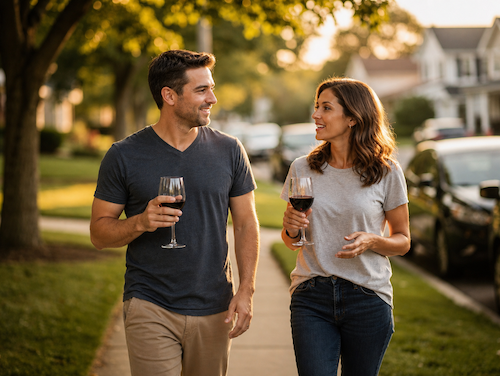
Wine is already an everyday drink in consumers' minds. Contrary to older survey data associating wine with special occasions and formal dinners, the social listening data showed consumers reaching for wine during at-home relaxation and everyday moments of connection: game nights, watch parties, "bring a bottle" gatherings, self-care nights, even one couple's standing "Wine Walk Thursday."
Gen Z is leaning in. The youngest legal-drinking cohort logged the largest increase in wine-based conversations and is growing more positive about the category. But as the researchers noted, that interest has to be earned.
The intimidation tax
None of this exists in a vacuum. A separate Wine Market Council study of 1,500 wine-hesitant drinkers, released in late 2025, found that occasion was the top reason (43%) people chose another drink, because wine didn't fit the vibe of the night. And a Woodbridge survey of 2,000 American adults found that roughly three-quarters believe the rules of wine are intimidating, with two-thirds convinced there are right and wrong ways to drink it.
Read those numbers together and the picture is clear. Every point of pretension in how wine gets presented, from jargon-heavy tasting notes to the quiet judgment of a formal tasting bar, works like a tax on new customers. They pay it by leaving.
What small wineries can do with this
The good news: small wineries are better positioned than anyone to act on these findings. You don't need a corporate rebrand. You need to meet people in the occasions they already love.
Start with your language. If your tasting notes require a glossary, rewrite them. Lead with what a wine tastes like, what to eat with it (yes, tacos count), and when to open it.
Rethink the occasions you market to. The research says your future customers are drinking wine on the couch, at game night, and on neighborhood walks, not just at anniversary dinners. Build events, content, and club offerings around those real moments.
Let fun lead. A wine slushie at a summer event or a snack-food pairing flight isn't dumbing down your craft. It's the on-ramp. The data shows curiosity is high and sentiment is positive. The only thing standing between a curious drinker and your wine is the fear of feeling stupid.
That last point is the entire reason Wine, Uncomplicated exists. We believe wine education should feel like a great night with friends, not an exam. The Wine Market Council's research is welcome confirmation that consumers have been asking for exactly that all along.
The consumer has said what they want. The wineries that listen first will win.