
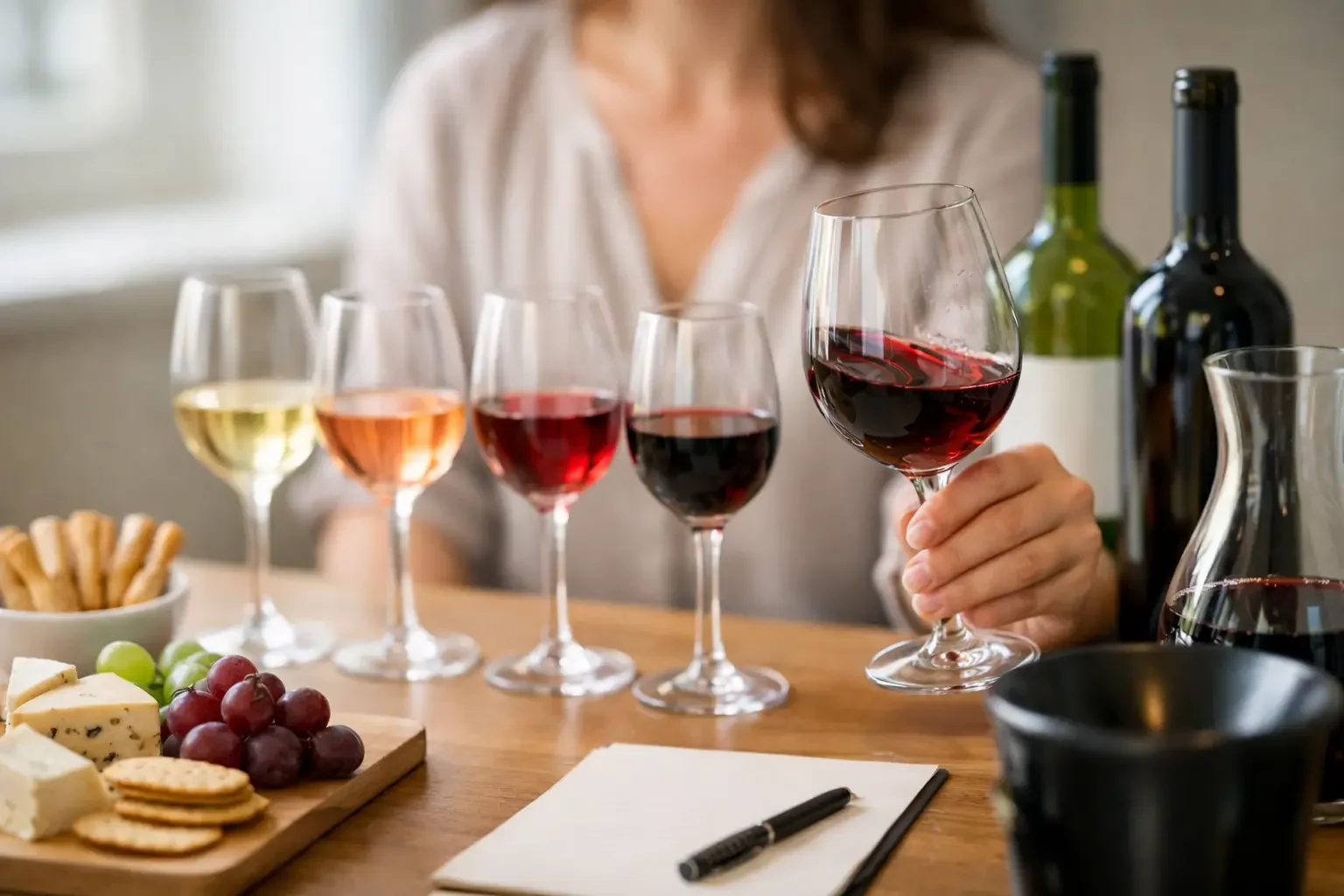
Wine tasting is not a test, and nobody is handing out grades for finding "blackcurrant leaf" in a glass of Cabernet. This beginner guide to wine tasting is about paying attention to what is in front of you, trusting your own senses, and finding wines you genuinely want to drink again.
The best tastings feel like a good dinner conversation: curious, relaxed, and a little more interesting because people bring different perspectives. You do not need a certification before you are allowed to have an opinion. You only need a glass, a little time, and permission to be specific about what you like.
What Wine Tasting Is Actually For
At its simplest, tasting is a way to slow down. Rather than taking one quick sip and deciding a wine is "good" or "bad," you notice its color, aroma, texture, flavor, and finish. Those details help you understand why a wine appeals to you and make your next bottle choice easier.
Tasting also gives you useful language. Maybe you learn that you love bright, tangy whites and find buttery Chardonnay too rich. Maybe you enjoy red wines with smooth tannins but not ones that leave your mouth feeling dry. That is far more helpful than memorizing a map of French wine regions just to order a bottle.
A wine can be well made and still not be for you. Personal preference is not a failure of expertise. It is the point.
If you want something to hold in your hand while you work through all of this, I put together a free guide called Choose Wine With Confidence that walks you through the basics without the lecture. It is a good companion to everything below.
Set Up a Simple, Comfortable Tasting
You do not need special lighting, a white tablecloth, or a drawer full of stemware. A clear wine glass with enough room to swirl is helpful, but a clean everyday glass works just fine. Avoid heavily scented candles, hand lotion, or cooking aromas if possible, because they can make it harder to smell the wine.
If you are tasting more than one bottle, start with lighter wines and move toward fuller, more tannic wines. In practical terms, that often means sparkling, then white, then rosé, then red. Save sweet wines for last.
Stronger flavors can overpower subtler ones, so a big red before a delicate Sauvignon Blanc is not doing the Sauvignon any favors.
Pour small amounts, around two ounces each. Keep water nearby and have plain crackers or bread available to reset your palate. If you are tasting several wines, it is completely normal to use a spit cup, and spitting is not rude or dramatic. It is how professionals stay focused when they need to evaluate many wines.
Temperature matters more than most people realize. White and sparkling wines should be chilled but not ice-cold, because extreme cold mutes aroma and flavor, and most reds show better slightly cool rather than warm from a sunny countertop. If a red seems boozy or flat, give it 15 minutes in the refrigerator before deciding it is not your style.
A Beginner Guide to Wine Tasting in Five Moves
1. Look
Hold the glass against a white background, such as a napkin or sheet of paper. You are not trying to diagnose the wine from its color. You are simply getting a first impression.
With white wine, color can range from nearly clear to lemony yellow to deep gold, and with red wine you may see purple, ruby, garnet, or brick tones. A young red often has more purple at the rim, while an older one may look lighter or more orange-brown. These are clues, not rules.
Ask yourself: is it pale or deep? Bright or cloudy? Does it look light and fresh, or rich and concentrated? If all you notice is "it is a pretty gold color," that is still a perfectly valid observation.
2. Smell
This is where most of the information lives. Our sense of smell does much of the heavy lifting when we experience flavor, which is why a congested nose can make food and wine seem dull.
Give the glass a gentle swirl, then take two or three short sniffs. Do not bury your entire face in the glass and inhale like you are trying to solve a crime. Short sniffs work better and keep alcohol fumes from overwhelming you.
Start broad. Does it smell fruity, floral, earthy, spicy, herbal, smoky, or savory? Then get more personal. A wine might remind you of lemon peel, peaches, black cherries, wet stones after rain, vanilla, fresh herbs, or your grandmother's cedar chest, and the best reference is one you actually know.
If you cannot identify a specific aroma, describe the feeling. Fresh and zippy. Warm and jammy. Dark and woodsy. Your vocabulary will grow through repetition, but clear impressions matter more than impressive words.
3. Sip
Take a small sip and let the wine move across your mouth before swallowing. If you are comfortable doing it, draw in a tiny bit of air through your teeth. It may feel silly at first, but it helps release aromas and can make the wine easier to understand.
Notice the wine's weight. Does it feel light like skim milk, medium like whole milk, or fuller and more coating like cream? Wine professionals often call this body, but "weight" is more intuitive.
Then consider the major building blocks. Acidity makes your mouth water and gives wine a lively, tart edge, tannin (mostly found in red wines) creates that drying sensation on your gums and tongue, and alcohol can add warmth. Sweetness can range from bone-dry to clearly sweet, though ripe fruit flavor does not always mean actual sugar.
None of these traits is automatically good or bad. High acidity can make one wine refreshing and another wine sharp, depending on balance and your taste, and tannin can make a red feel structured and food-friendly or overly rough if it is out of proportion. Context matters.
4. Think About the Finish
After you swallow, pause. How long does the flavor stay with you? Does it fade quickly, or does it keep changing for several seconds? A long finish can be a sign of quality, but it is also simply one more part of the experience.
More importantly, ask whether the finish makes you want another sip. Some wines are interesting but exhausting, and others are simple, delicious, and exactly right for a Tuesday night pizza. There is room for both.
5. Say What You Think
A useful tasting note can be one sentence: "This is a light, citrusy white with lots of acidity, and I would drink it with fish tacos." That tells you more than a page of borrowed terminology.
Try to separate what you observe from whether you enjoy it. For example: "This red has a lot of oak, vanilla, and drying tannin. I can see why someone would like it, but it is not what I want tonight." That is a confident opinion, not an uninformed one.
If you would rather not build a note from scratch every time, Choose Wine With Confidence includes the same framework in a format you can keep on your phone or print for the counter.
The Terms Worth Knowing
You can enjoy wine without jargon, but a few terms make shopping and conversation easier. Dry means the wine has little to no noticeable sugar, fruity refers to fruit aromas or flavors rather than sweetness, acidic means tart and mouthwatering, and tannic means drying or grippy. Oak can bring flavors such as vanilla, toast, baking spice, coconut, or smoke.
Mineral is a less precise word, but people often use it for stony, salty, chalky, or flinty impressions. If that feels vague, use the more specific sensation instead, because "it tastes salty and like lemon peel" is much clearer than "very mineral."
The word "smooth" is common, but it can mean several things: low tannin, soft acidity, integrated alcohol, or simply no harsh edges. When someone says they want a smooth red, ask what they have enjoyed before and you will get a better recommendation.
How to Practice Without Making It a Production
The fastest way to learn is to compare two wines side by side, and the trick is choosing bottles with one clear difference. Try a Sauvignon Blanc next to a Chardonnay, or a Pinot Noir next to a Cabernet Sauvignon. You will immediately notice that "white wine" and "red wine" are far too broad to be useful categories.
For an easy tasting at home, pour one wine before dinner and one alongside food, then notice what changes. A bright Spanish Albariño may feel sharp on its own but come alive with salty chips, grilled shrimp, or tacos, and a tannic red may feel firmer before food and softer beside a burger or steak.
Keep a simple note on your phone with the wine name, the occasion, two or three impressions, and whether you would buy it again. Over time, patterns emerge, and you may discover that you consistently enjoy wines from cooler climates, lighter-bodied reds, or whites with plenty of acidity. That is useful knowledge you can take to any wine shop or restaurant.
A Few Tasting Habits to Skip
Do not feel pressure to swirl theatrically, because a gentle circle on the table works. Do not apologize for not smelling what someone else smells, because aroma is personal and people have different reference points. And do not assume the most expensive bottle should be your favorite, since price can reflect scarcity, labor, vineyard location, aging, reputation, or demand, and none of that overrides your palate.
There is also no need to force yourself to like a style because it is fashionable. If natural wine, orange wine, Napa Cabernet, or dry Riesling is not clicking for you yet, that is fine. Try it in another setting, with food, or from another producer someday, or move on. Wine should make a gathering better, not turn it into homework.
Give It Five Minutes
The next time you open a bottle, give it five unhurried minutes before the conversation takes over. Notice one thing you smell, one thing you feel, and one food you would enjoy with it. That small pause is enough to turn a glass of wine into something more memorable, and enough to help you choose your next one with real confidence.
If you want a head start, grab my free guide, Choose Wine With Confidence. And when you are ready to turn all of this into an actual evening with friends, that is exactly what we do at Wine, Uncomplicated, so come tell me what you have in mind.