
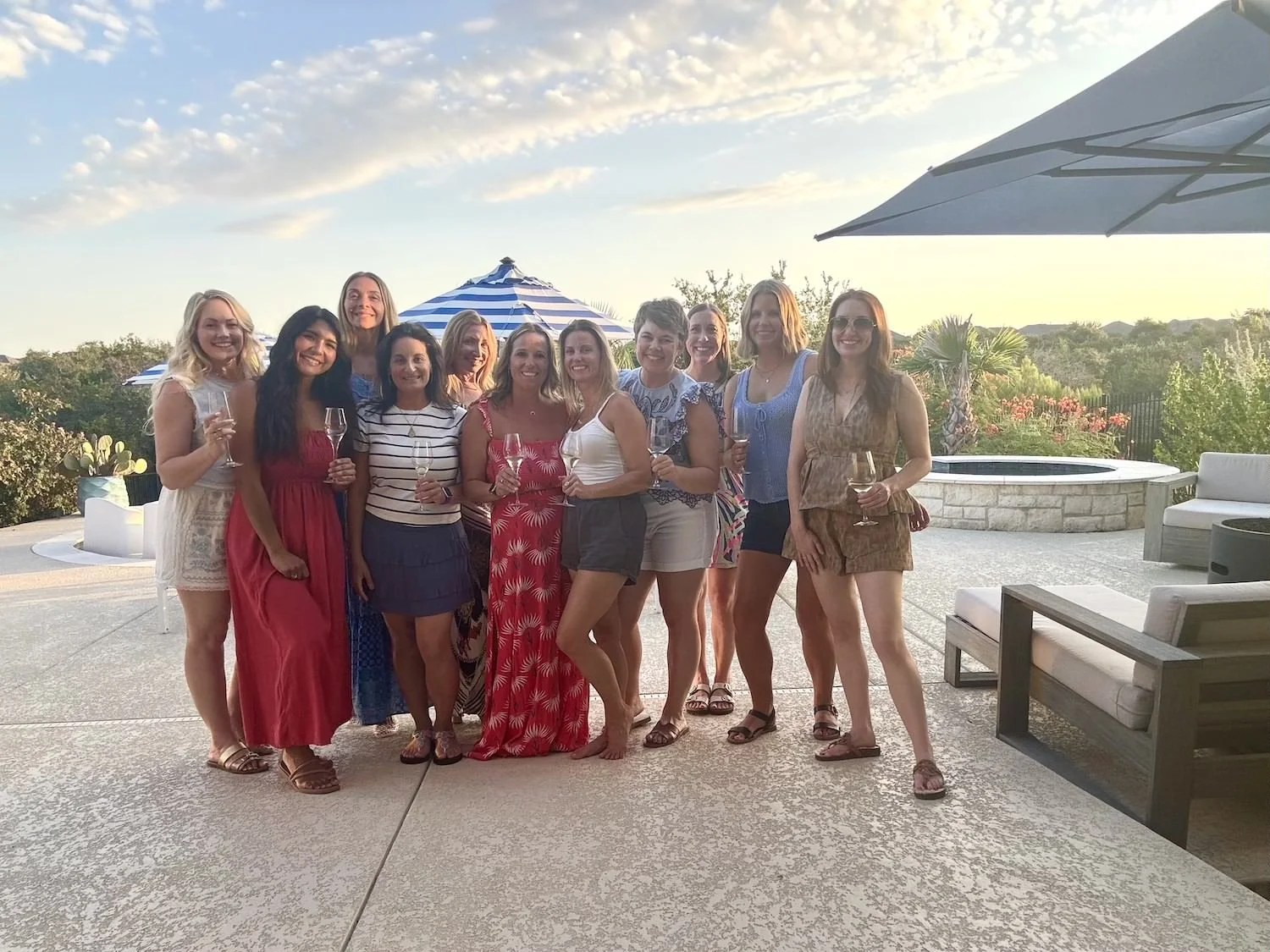
It was August in Texas, which meant it was roughly a thousand degrees outside, and we did the only sensible thing you can do about that: we filled a room with cold bubbles and got to work. Our Summer of Bubbles tasting put five different styles of sparkling wine side by side, and by the end of the night a room full of people who mostly just knew "Champagne good" could taste, and explain, exactly what made each glass different.
That is the whole reason I love a comparative tasting. You can read about the difference between Prosecco and Champagne all day, but the moment you have them next to each other in two glasses, it clicks in a way no article ever quite delivers.
Five glasses, one very good reason to pay attention
Here is the thing about bubbles: almost every sparkling wine in the world gets its fizz one of two ways, and once you know which is which, you can predict most of what a bottle will taste like before it is even open.
Some wines get a second fermentation right inside the bottle you buy, then rest for months on the spent yeast, which is where all that toasty, bready depth and those fine little bubbles come from. Others get their bubbles fast, in a big steel tank, which keeps them fresh and fruity and easy. That single fork in the road is most of the story, and tasting five styles in a row makes it impossible to miss.
The five bottles, from easy breezy to the real deal
We started soft and fruity and worked our way toward rich and toasty, then finished on a rosé.
First up was La Vostra Prosecco from Italy, the tank-method crowd-pleaser, all green apple and honeysuckle and pure easy fruit. Then came Campo Viejo Cava from Spain, made the same way as Champagne but for the price of a weeknight, drier and a little savory with the first hint of that bready character. Third was Levert Frères Crémant de Bourgogne, real Burgundy grapes made the full traditional way just outside Champagne, and you could feel the room lean in as it turned more elegant and citrusy.
Fourth was the big one, Marie de Moy Champagne, the actual thing from the actual place, mineral and taut and long from Champagne's chalky soil and cold climate. And we closed with Dulong Crémant de Bordeaux Rosé, a pretty pink sparkler made from Bordeaux's famous red grapes, Cabernet Franc and Merlot, which is a fun little brain-bender when people realize the region they know for serious reds can also sparkle.
The secret is on the label
One of the best moments of the night was watching people realize how much a wine label actually tells you, if you know the handful of words to look for. Words like Brut, Extra Brut, and Extra Dry are not marketing fluff, they are a sweetness scale, and the famous trick is that Extra Dry is actually sweeter than Brut, not drier.
That kind of thing sounds like insider knowledge, and then you learn it in about ten seconds and never un-know it. If you want the full cheat sheet, I broke it all down in how to read a wine label.
The plot twist: Champagne didn't always win
Here is the surprise that made me grin. When everyone named their favorite, Champagne did not run away with it. Plenty of people preferred the Crémant, and the rosé pulled real votes too.
I love this every single time, because it quietly dismantles the idea that the most expensive bottle is automatically the best one. The best bottle is the one you actually like, and a tasting is how you find out what that is for you, no wine snobbery required. It is the whole reason I believe wine education should feel less intimidating, not more.
Sabrage, snacks, and the case for making wine fun
We also broke out the sabers. There is something about lopping the top off a Champagne bottle with a blade that turns a wine tasting into an event, and yes, everyone wanted a turn. If you have ever wondered where that ritual and the whole story of Champagne even came from, the answer is more surprising than you think, and it was not Dom Pérignon, as I get into in who invented Champagne.
And because this is Wine, Uncomplicated and not Wine, Intimidating, the food was proudly catered by Trader Joe's, thoughtfully paired to the wines and absolutely delicious. Simple doesn't mean basic. Simple means everyone relaxes and actually has a good time.
Want to taste like this? You can.
The best part of a night like this is how repeatable it is. You do not need a sommelier or a special-occasion budget, you need five different styles, a few friends, and a little structure to guide the conversation.
If you would rather not wrangle the details yourself, that is exactly what I do. You can see how I help wine lovers host their own tasting events, or borrow my playbook straight from how to host a wine tasting party without the fuss.
Ready to plan your own Summer of Bubbles, or a tasting built around whatever you are curious about? Let's uncomplicate it together. Bring the curiosity, I will bring the bubbles.
And check out the Instagram recap here.