
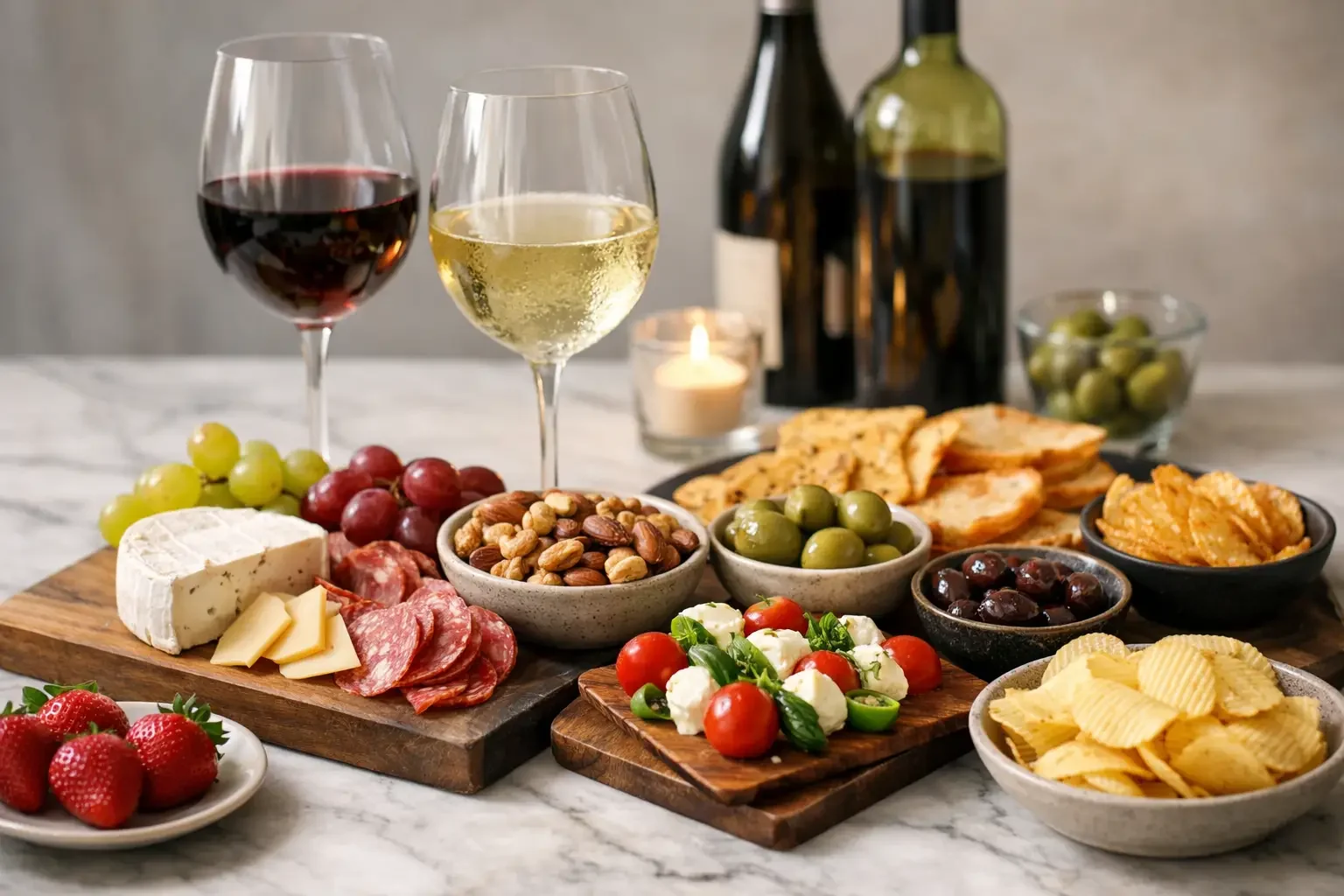
The bottle is chilled, the friends are on their way, and suddenly a bowl of random crackers feels like a bigger decision than it should. The best snacks for wine night are not about building a picture-perfect grazing board or memorizing pairing rules. They are about putting out a few things that make the wine taste better, keep people comfortable, and let you enjoy your own gathering.
Start with a simple idea: wine usually likes salt, fat, crunch, and a little sweetness. That covers far more snack options than the traditional cheese-and-charcuterie routine. A great pairing can be specific, but a good wine night does not require precision. If you like the bottle and your guests like the snacks, you are doing it right.
Best Snacks for Wine Night: Start With Contrast
Wine has acidity, tannin, fruit, bubbles, and sometimes a touch of sweetness. Snacks can either soften those elements or give them something interesting to play against. A buttery cheese can make a tannic red feel smoother. Salty potato chips can make a crisp sparkling wine feel even more refreshing. Dark chocolate can pull out the fruit in a fuller red, though it can make a dry, delicate wine taste more bitter.
The most useful hosting move is variety. Put out one salty item, one creamy or rich item, one fresh item, and one slightly sweet item. You do not need twelve ingredients. Four thoughtful choices will carry the evening better than a crowded board full of things no one reaches for.
12 Snacks That Work With Most Wine Nights
1. Potato chips
Plain, ridged, kettle-cooked, or lightly salted potato chips are one of wine's most dependable party tricks. Their salt and fat love sparkling wine, rosé, Sauvignon Blanc, and bright, lighter reds such as Pinot Noir. If you are opening Champagne or any good bubbly, chips may be the easiest impressive snack you can serve.
Skip heavily flavored chips if you are pouring several wines. Barbecue, ranch, and hot chips can take over the palate quickly. They can be fun with a casual red or off-dry Riesling, but they are not the most flexible choice.
2. Marinated olives
Olives bring salt, savory depth, and a little bitterness, which makes them especially good with Mediterranean-style whites and reds. Try them with Vermentino, Albariño, dry rosé, Sangiovese, or Grenache. Warmed olives with citrus peel and herbs feel generous without requiring much work.
If someone at your gathering dislikes olives, do not worry. They are a supporting player, not the entire snack plan.
3. A great soft cheese
Brie, triple cream, goat cheese, or a fresh ricotta-style spread gives wine something rich to work with. Creamy cheeses are especially friendly with crisp whites, sparkling wine, rosé, and fruit-forward reds. Goat cheese with a dry Sauvignon Blanc is a classic for a reason: the wine's bright acidity cuts through the tang and creaminess beautifully.
Let cheese sit out for 30 to 45 minutes before serving. Cold cheese tastes muted, and you paid for more flavor than that.
4. Aged cheddar or nutty cheese
For red wine drinkers, add a firmer cheese such as aged cheddar, Gouda, Manchego, or Comté. These cheeses have enough salt and savory character to stand up to Cabernet Sauvignon, Syrah, Malbec, and Tempranillo. Aged Gouda's caramel-like notes are particularly good with a rich red.
There is no need to offer five cheeses. One soft option and one aged option gives your guests range without leaving you with a refrigerator full of tiny leftovers.
5. Salami, prosciutto, or smoked turkey
Cured meats work because they are salty, fatty, and satisfying. They are an easy match for rosé, sparkling wine, Chianti, Rioja, and lighter reds. If you want a less traditional option, thinly sliced smoked turkey or good-quality roast chicken can be just as welcome, especially alongside a bright white wine.
Keep spice in mind. Peppery or spicy salami can make higher-alcohol wines feel hotter. With spicy meat, choose a chilled red, a juicy rosé, or a white with a hint of sweetness.
6. Roasted nuts
Almonds, Marcona almonds, pistachios, pecans, and cashews are quietly excellent wine snacks. Their richness works with nearly everything, while the roasted flavor gives them enough presence for red wine. Almonds are particularly good with Spanish whites, cava, Sherry, and Rioja. Pecans make sense for an Austin wine night, especially when lightly salted or tossed with rosemary.
Avoid aggressively sweet or spicy nut mixes if your goal is to taste several wines. A simple roasted nut lets the bottle stay in the conversation.
7. Popcorn
Popcorn is inexpensive, unfussy, and far more wine-friendly than it gets credit for. Buttered popcorn is lovely with Chardonnay, sparkling wine, and softer reds. Parmesan popcorn leans savory and can handle rosé or Sangiovese. For a casual movie-and-wine night, this may be all you need.
The trade-off is mess. Put out napkins and a wide bowl, and accept that the best parties are rarely crumb-free.
8. Fresh fruit
Grapes are easy, but pears, apples, strawberries, figs, and sliced peaches often bring more personality. Fresh fruit is especially helpful when serving aromatic whites, rosé, sparkling wine, or lighter reds. Apple slices with cheddar and Pinot Noir, for example, create a satisfying mix of sweet, salty, and earthy.
Citrus can be trickier. Its sharp acidity may make a mellow wine seem flatter, so save it for brighter whites and bubbly.
9. Dried fruit
Dried apricots, dates, cherries, and figs add a sweet, chewy contrast to salty cheese and nutty snacks. They shine with fuller whites, Sherry, Port, late-harvest wines, and richer reds. A dried fig beside Manchego and a Spanish red is simple, delicious, and not remotely fussy.
Use dried fruit in small amounts. Too much sweetness can make a dry wine taste lean or bitter.
10. Good bread and crackers
Bread is not exciting on its own, but it makes everything else easier to enjoy. A sliced baguette, seeded crackers, or a sturdy crispbread gives guests a neutral reset between pours. It is especially useful if you are opening wines with more tannin or acidity.
Choose plain or lightly seasoned options. Strong garlic crackers, sweet crackers, and heavily herbed crisps can compete with the wine more than you expect.
11. Hummus or a bean dip
A lemony hummus, white bean dip, or whipped feta adds a substantial, vegetarian-friendly option to the table. Pair these with Sauvignon Blanc, Pinot Grigio, Grüner Veltliner, rosé, or lighter reds served with a slight chill. Add cucumber, carrots, pita chips, and radishes, and your spread starts to feel like a meal without becoming a project.
For bolder reds, choose a smoky or roasted pepper dip rather than a very lemon-forward version.
12. Dark chocolate
Chocolate is best treated as its own late-evening moment, not a universal wine snack. Dark chocolate works with Port, Banyuls, late-harvest reds, and some plush, fruit-driven Cabernet or Zinfandel. Milk chocolate can be easier with lighter sweet wines or berry-forward reds.
With bone-dry white wine or elegant Pinot Noir, chocolate may overwhelm the glass. That does not mean you cannot serve both. Just enjoy the wine first, then move to chocolate when the conversation settles in.
Build Your Wine Snack Table Around the Bottle
If you are serving sparkling wine, think salty and crisp: chips, popcorn, fried snacks, almonds, and soft cheese. For a zippy white, bring in goat cheese, hummus, vegetables, olives, and fresh fruit. Rosé is unusually flexible and happy with charcuterie, nuts, cheese, chips, and almost any warm-weather snack.
For lighter reds, lean toward mushrooms, aged cheese, salami, roasted nuts, and fruit. With bigger reds, give tannin something fatty and savory: aged cheddar, Gouda, cured meat, smoky nuts, or a simple beef slider if the night is turning into dinner. You do not need a certification before you are allowed to have an opinion. Take a bite, take a sip, and notice whether the wine feels more balanced, more expressive, or simply more enjoyable.
A final hosting note: do not wait for the perfect board, the rare cheese, or the impressive bottle. Open the wine you have, add chips and a few good things from the grocery store, and make room for people to linger. That is where the memorable part of wine night usually happens.