
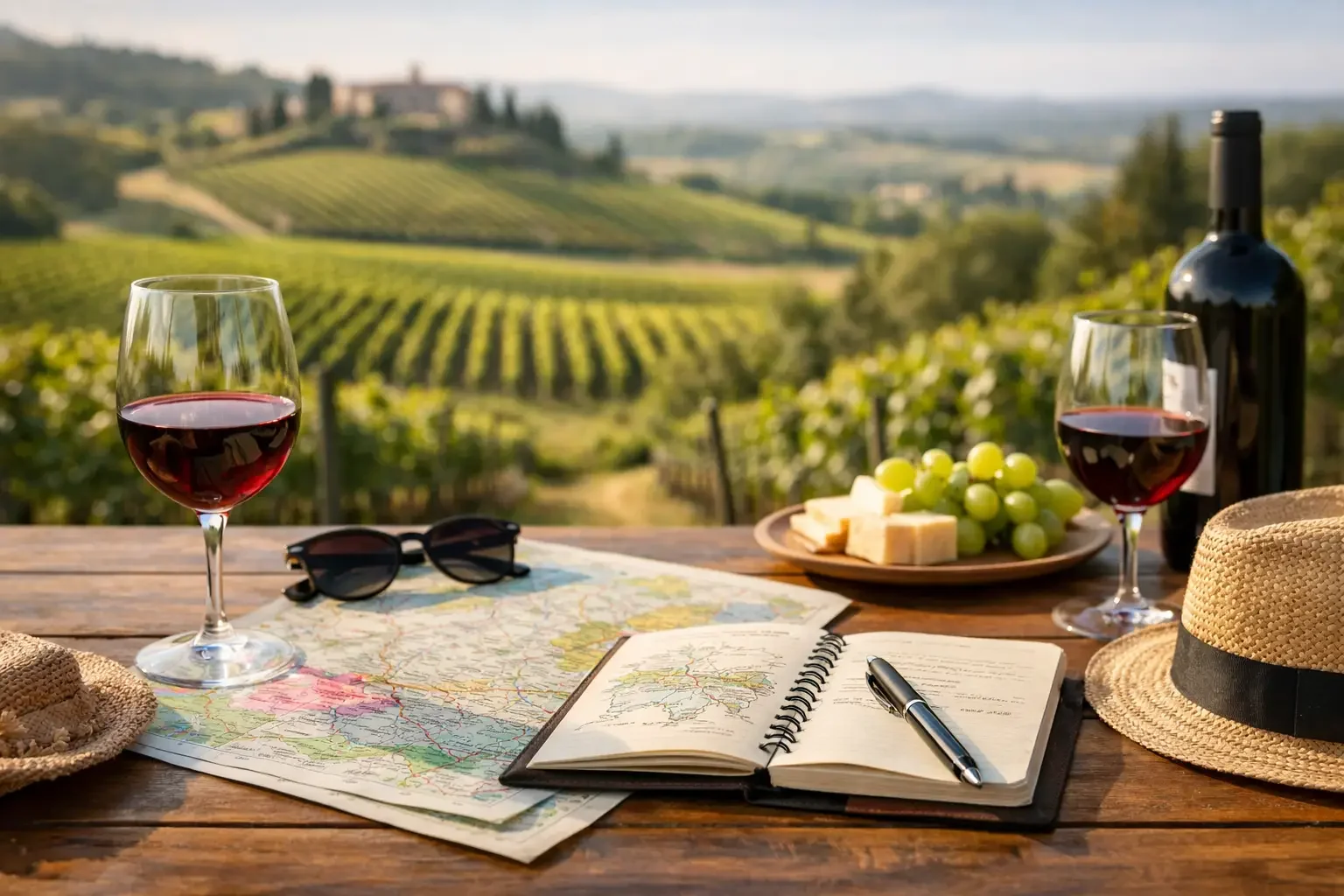
The best wine trips rarely come from trying to fit in the most wineries. Good wine region trip planning starts with a simpler question: what kind of weekend do you actually want to have? Maybe it is a relaxed long lunch and a few great bottles. Maybe it is learning why one hillside produces a different wine than the next. Maybe it is gathering friends somewhere beautiful without appointing yourself the group’s full-time logistics manager.
A wine country itinerary should make room for the reason you came in the first place: to enjoy wine, food, place, and people. You do not need a certification before you are allowed to have an opinion. You also do not need to visit six wineries in a day to call the trip worthwhile.
Start Wine Region Trip Planning With the Right Region
The familiar names are familiar for a reason, but the most famous region is not automatically the best fit. Napa can deliver polished hospitality, landmark producers, and excellent dining, with higher prices and more advance planning. Sonoma has more geographic range and a generally less formal feel, though its size means driving can add up quickly. The Texas Hill Country is an easy Austin-area escape and especially enjoyable when you focus on a few quality-minded stops rather than treating Highway 290 like a checklist.
For a longer trip, consider what you want to drink as much as where you want to sleep. Willamette Valley makes sense for Pinot Noir fans who appreciate cool weather, thoughtful meals, and unhurried pacing. Santa Barbara County offers remarkable variety, from crisp coastal Chardonnay to Rhône varieties, along with a more spread-out layout. Finger Lakes is a smart choice for Riesling lovers, lake views, and a lower-key tasting culture.
Season matters, too. Harvest can be exciting, but it is also busy. Tasting rooms may be crowded, winery teams are stretched thin, and reservations become more valuable. Spring brings green vineyards and a lighter calendar. Winter can offer quieter visits and better availability, though some areas have shorter hours or less predictable weather. There is no universally perfect month. Choose the trade-off you care about most.
Pick One Home Base, Not Three
A common planning mistake is changing hotels every night in pursuit of efficiency. On paper, it can look smart. In real life, it means packing, checking in, finding parking, and losing the easy rhythm that makes a trip feel like a break.
Choose one home base for a two- or three-night visit, then build each day around a small section of the region. Stay near a town if restaurants, walkability, and a post-tasting cocktail matter to you. Stay farther out if you want vineyard views and a quieter morning. Neither is more authentic. The right answer is the one that fits your group.
Before booking, map the actual drive times between your lodging and the wineries you are considering. Wine regions are often much larger than they appear. A tasting that looks nearby may involve narrow roads, traffic, or 40 minutes behind the wheel. Keep the farthest appointment early in the day, then work your way back toward dinner.
Book Fewer Tastings, Better
For most people, two appointments a day is plenty. Three can work if the wineries are close together, the tastings are brief, and you have a designated driver. Beyond that, your palate gets tired, the stories blur together, and the day becomes more about making the next reservation than enjoying the glass in front of you.
Aim for variety in the experience. One larger, established winery may offer a polished introduction to the region. A smaller producer can bring more personal conversation and a closer view of how the wine is made. A vineyard tour or seated food pairing can be memorable, but only if it genuinely interests you. Do not book the elaborate experience just because it sounds like the “proper” thing to do.
When you reserve, read the fine print. Many wineries now require appointments, charge tasting fees, limit group sizes, and enforce cancellation windows. Ask whether the experience is standing or seated, indoors or outdoors, and how long it lasts. If someone in your group does not drink, check whether they are welcome and whether nonalcoholic options are available.
It also helps to share a little context in advance. Let the winery know if you are celebrating an anniversary, traveling with a wine-curious group, or especially interested in a certain grape. Hospitality teams can often tailor the conversation when they know what you hope to get from the visit.
Build the Day Around Food and Transportation
Wine is more enjoyable when you have eaten something besides a stray hotel granola bar. Plan a real breakfast, make lunch a priority, and carry water in the car. This is not glamorous advice, but it is the difference between a fun afternoon and one person quietly regretting their third pour by 2:30.
Lunch does not have to be a formal restaurant reservation. A thoughtful picnic can be ideal, particularly in regions where wineries have outdoor space. Just confirm the winery’s food policy first. Some welcome outside food, some sell snacks or cheese boards, and some do not allow it at all.
Transportation deserves an honest conversation before the trip. If everyone wants to taste, hire a driver or use a local tour service. If one person plans to drive, agree on that role before the first appointment and make sure they are comfortable with it. Rideshare can be unreliable in rural areas, so do not assume you can summon a car after the last pour.
Spitting wine at a tasting is normal, not rude. So is sharing a tasting when a winery allows it. These are useful options when you want to stay alert or save room for dinner. The goal is not to prove you can handle the most wine. The goal is to remember the wines you liked and get home safely.
Leave Space for the Part You Cannot Schedule
A tightly packed itinerary leaves no room for the discoveries people talk about afterward: the farm stand with perfect peaches, the bartender who points you to a great local bottle, the unplanned second glass at a restaurant because the table is having a good time.
Give each day a little white space. If a tasting runs long because you are having a meaningful conversation with the host, you should not have to rush away. If the weather turns, you want enough flexibility to trade a vineyard picnic for a leisurely lunch. Wine country is not a race, and it does not reward overbooking.
This is also where a custom itinerary can be useful, especially for a group with mixed interests. Wine, Uncomplicated plans trips around how people actually travel, whether that means serious Cabernet drinkers, first-time tasters, good-food people, or a combination of all three. The best plan feels considered without feeling overproduced.
Buy Wine With a Plan for Getting It Home
It is easy to get swept up at the winery, especially after a warm welcome and a particularly good final pour. Buy what you genuinely want to open again, not what you feel obligated to buy because you enjoyed the visit. A mixed case from the trip can be a lovely memory, but it should fit your budget, storage space, and drinking habits.
Ask whether the winery can ship to your state, but remember that weather may affect shipping windows. Do not leave wine in a hot car while you continue tasting or go to dinner. If you are flying, check airline rules and pack bottles carefully in a dedicated wine suitcase or protective sleeves inside checked luggage. Carry-on security rules will not make an exception for the special bottle you found.
Take a quick photo of labels you like, along with a note about where you drank them and what you ate. That small habit is more useful than trying to remember every detail later. Your future self will appreciate knowing whether that bottle was the one you loved at sunset, or simply the one with the memorable label.
A well-planned wine trip should leave you with more than purchases and tasting notes. Leave a little room to linger, ask questions, and order the bottle that surprises you. That is usually where confidence begins.