
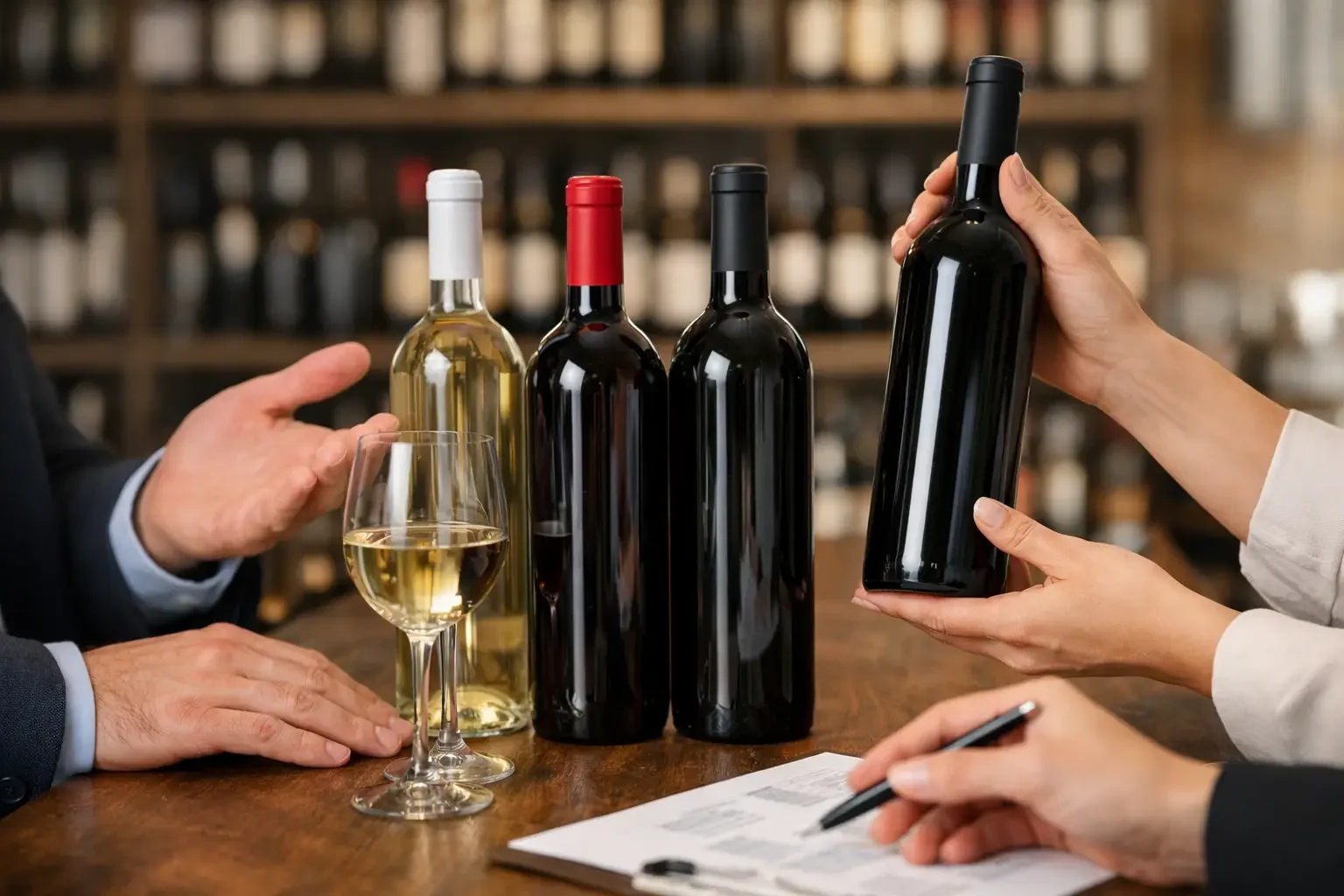
The wine wall is designed to make you feel like every bottle requires a dissertation. Hundreds of labels, unfamiliar grapes, shelf tags full of scores, and the quiet fear of bringing home something you will not enjoy. Good wine bottle selection help should make that moment easier, not hand you more rules to memorize.
Start with a more useful question than, “What is the best wine?” Ask, “What do I want this bottle to do?” A Tuesday-night pizza wine has a different job than a host gift, a steak dinner bottle, or something to open with friends who are curious but not trying to hold a seminar. Once you know the job, the choice gets much clearer.
Wine Bottle Selection Help Starts With the Occasion
The occasion gives you a practical framework before you even look at a label. If you are buying for a casual meal, look for something friendly and flexible. A medium-bodied red or a dry, fresh white will cover a lot of ground. You do not need a famous producer or an expensive bottle to make dinner feel considered.
For a special meal, let the food lead. Richer dishes such as grilled steak, lamb, mushrooms, or barbecue can handle fuller reds with structure, including Cabernet Sauvignon, Syrah, Malbec, or a blend. Lighter dishes such as roast chicken, salmon, pasta with vegetables, or tacos tend to work beautifully with Pinot Noir, Grenache, Sauvignon Blanc, Chenin Blanc, or dry rosé.
That does not mean pairing needs to be perfect. A bottle does not fail because it is not the textbook match for dinner. Think of pairing as a way to increase the odds of a great experience, not a test with one correct answer. If you love a bright, high-acid white wine and your dinner is a burger, pour it. Your palate gets a vote.
For a gathering, choose wines that are generous rather than challenging. This is not the moment for an aggressively tannic red, an intensely oaky Chardonnay, or an orange wine that needs a long conversation before anyone decides whether they like it. A juicy red, crisp white, or sparkling wine will make more people happy and keep the focus where it belongs: on the people in the room.
Use Your Own Taste as the Starting Point
The fastest route to better choices is noticing what you already enjoy. You do not need to identify every aroma in a glass. You only need a few honest preferences.
Do you gravitate toward coffee, dark chocolate, and bold flavors? You may like fuller reds with darker fruit and more oak, such as Cabernet Sauvignon, Rioja Reserva, or many red blends. Do you prefer tart fruit, fresh herbs, and lighter-bodied beers? Pinot Noir, Gamay, Barbera, and cool-climate Syrah may be more your speed.
For whites, think in the same broad terms. If you like citrus, mineral water, and bright freshness, try Sauvignon Blanc, Albariño, dry Riesling, or Pinot Grigio. If you prefer a rounder texture and flavors closer to baked apple, vanilla, or lemon curd, Chardonnay may be a better fit, especially one with some oak aging.
Sweetness deserves a quick mention because people often use the word differently. A wine can taste fruity without being sweet. A ripe California Zinfandel may taste like blackberry jam, but still be technically dry. If you want actual sweetness, look for terms such as demi-sec, off-dry, late harvest, or Moscato. If you want dry wine with plenty of fruit flavor, tell the shop staff exactly that. It is a very normal request.
Read the Label for Clues, Not Credentials
A wine label can be useful, but it is not a personality test. You do not need to recognize the producer, understand every appellation, or care whether the bottle has an elaborate family crest.
Begin with the grape, region, and alcohol level. Those three details can tell you quite a bit. A bottle labeled Pinot Noir at 12.5% alcohol from Oregon, for example, is likely to be lighter and fresher than a 15% alcohol Cabernet Sauvignon from a warm California region. Neither is automatically better. They are simply built for different tastes and moments.
Region matters because climate shapes wine. Cooler areas often make wines with more acidity, restraint, and tart fruit. Warmer areas tend to produce riper fruit, fuller body, and higher alcohol. If you repeatedly enjoy wines from one place, that is useful information. Keep following the thread.
Back-label language can help, too, as long as you take it lightly. Words like “crisp,” “bright,” “fresh,” and “mineral” usually point toward a lighter, higher-acid style. “Rich,” “lush,” “velvety,” and “full-bodied” suggest more weight and ripeness. Marketing language is not a guarantee, but it can steer you in the right direction.
Set a Budget That Makes Sense for the Moment
Price matters, but not in the way wine culture sometimes suggests. A higher price can reflect lower yields, more expensive land, longer aging, careful farming, or simple scarcity. It can also reflect packaging, reputation, and demand. More expensive does not always mean more enjoyable for you.
For everyday drinking, there are plenty of satisfying bottles in the $15 to $25 range, especially if you are open to less familiar regions and grapes. Spain, Portugal, Argentina, Chile, South Africa, and parts of Italy and France offer excellent value, though every category has exceptions.
If you are spending $30 to $50, you are often paying for more detail, balance, and a clearer sense of place. That can be worth it for a dinner, gift, or bottle you want to linger over. Beyond that, buy because you are interested in the wine, the producer, or the occasion - not because you feel obligated to prove you have good taste.
A smart rule: spend a little more when the bottle is the event. Spend less when the bottle is one part of a busy table full of food, conversation, and competing flavors.
Ask Better Questions at the Wine Shop
A good wine professional is not there to make you feel uninformed. Give them a few useful details, and they can do far more than point at a shelf tag.
Instead of saying, “I need a good red,” try: “I want a dry red under $25 for burgers. I usually like Pinot Noir but want something with a little more body.” Or say, “I need a white for a host gift. They like Sauvignon Blanc, and I would rather bring something they may not have tried.” That is enough direction for a thoughtful recommendation.
Be honest about dislikes, too. If you hate heavy oak, say so. If bitter tannins make your mouth feel dry in a way you do not enjoy, mention it. If you want something easygoing rather than serious, that is valuable information, not a lesser preference.
And if a recommendation misses, remember the bottle is feedback, not a verdict. Take a photo of the label or write down the grape, region, and what you liked or did not like. Over time, those small notes become your own reliable map.
Keep Three Reliable Bottles in Your Rotation
Confidence does not require a cellar. It helps to know a few styles you can reach for without overthinking: a bright, dry white; a versatile, medium-bodied red; and a sparkling wine or rosé for gatherings. From there, add bottles that stretch your comfort zone one step at a time.
Maybe you usually drink Cabernet, so you try a Cabernet Franc. Maybe Sauvignon Blanc is your standby, so you bring home a dry Chenin Blanc. This is how wine gets more interesting without becoming homework.
The best bottle is rarely the one with the most intimidating label or the highest score. It is the bottle that suits the meal, the people, your budget, and your own taste. Choose it with a little intention, open it without ceremony, and let the next glass teach you what to try next.