
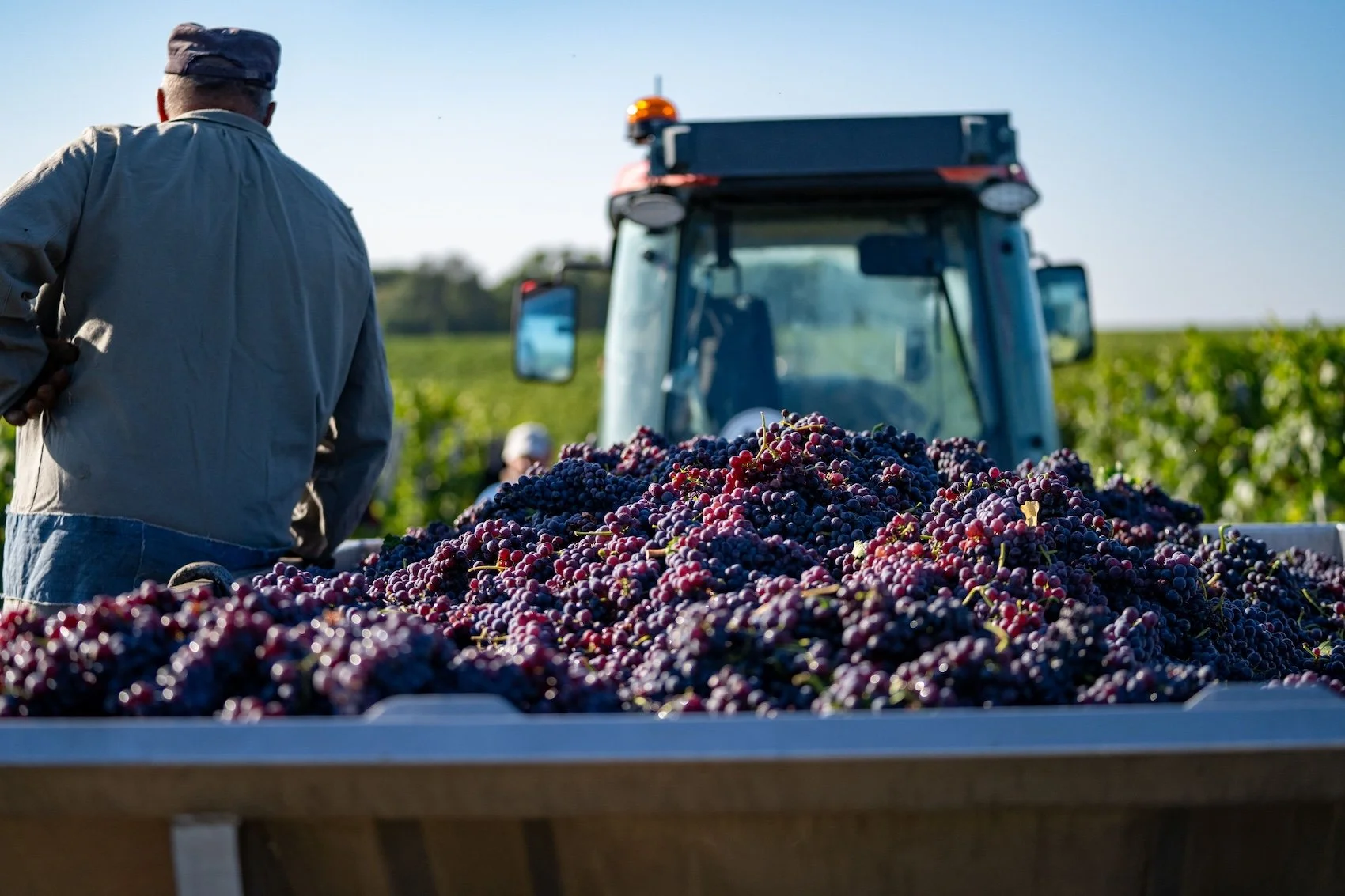
There is a moment on the crush pad, usually early, usually when everyone is tired and slightly damp, when the first juice comes off the press and it is the most purple thing you have ever seen. Somebody says something about the color. Somebody else is already dragging a bin.
Nobody films it. Everybody is working.
I understand this completely, because I make wine by hand under my own label and we pick at Newsom Vineyards up in the High Plains. On a pick day the last thing on earth I want to do is stop and think about content. But that moment is the single most valuable marketing asset your winery will produce all year, and it lasts about four seconds.
The rest of the year, you have to invent something to say
Here's the uncomfortable math of winery marketing. For roughly ten months a year, you are trying to make a post out of nothing much happening. A bottle on a table. A sunset over the vines you've already photographed four hundred times. A quote graphic about how wine brings people together.
That content is fine. It's also completely interchangeable with every other winery's content, which means it isn't doing anything for you.
Then August rolls around and suddenly there is genuine, visible, physical work happening on your property every single day. Grapes arriving. Sorting tables. Punchdowns. Stained hands. Somebody's grandmother showing up to help. Real people doing real labor to make a thing.
That's the story. It's already true, it requires no invention, and it only exists for about eight weeks.
Why harvest content sells wine in December, not in September
This is the part most wineries get backwards. They post a crush photo in September, it gets some likes, and that's the end of it.
But almost nobody is buying wine in September. They're buying in November and December, when they need gifts, holiday bottles, and something to bring to a dinner party. And by then your feed has gone quiet because harvest is over and you're back to photographing bottles on tables.
So the play is to capture aggressively in August and September and then spend it slowly through the fourth quarter. When someone is deciding in early December whether to buy your Cabernet or the one next to it on the shelf, the thing that tips them is having watched those grapes get picked. That's not nostalgia, it's the same three seconds of shelf attention you're already fighting for, except you've been earning it since August.
The five shots that are worth more than everything else
You do not need a videographer and you do not need to add a job to harvest. You need somebody to hold up a phone for a combined total of about ten minutes a day. Assign it to one person, ideally somebody who is not also driving the forklift.
Get these:
The grapes arriving. Bins coming off the truck, still cold, still dusty. This is the only shot that proves the fruit is real and local.
Sorting. Hands moving over a table, pulling out what doesn't belong. People are fascinated by this and almost no winery shows it.
First juice. The color, the moment it comes off the press. Film it vertically and don't narrate, just let it run.
A tired person telling you one true sentence. Point the camera at your winemaker or a picker at the end of the day and ask what today was like. Ten seconds. Unscripted. This is the one that performs.
The mess. Purple stains, wet boots, a floor that needs hosing. The polish is what makes wineries look like everyone else. The mess is what makes you look like you.
That's it. Five categories, shot repeatedly across the season, and you'll finish harvest with more usable material than you produced in the previous six months.
Say what it's for, or it's just pretty
The mistake I see most often is a beautiful harvest reel with a caption that says something like "Harvest 2026 is underway!" and nothing else.
Tell people what block it came from and what it's going to become. "This is the Tempranillo from the north block, and in about eighteen months it'll be the bottle you're drinking at Thanksgiving." Now the footage is attached to a product somebody can eventually buy, and you've quietly planted the timeline in their head.
This is the difference between documenting and marketing, and it costs you one extra sentence. If you want to go deeper on connecting the work to the bottle, finding the story that's already true about your winery is the piece to read next.
Bank it, then ration it
When harvest ends, do one thing before you collapse: dump everything into a single folder and label it by week.
Then plan to release it slowly. A pressing clip in October when the tasting room is quiet. The tired-winemaker quote in November when you're pushing club renewals. First juice again in December, this time captioned with what that wine has become and where people can get it.
You already did the hard part. The wine is made and the footage exists. All that's left is not letting it sit on a phone until it's stale, which is the failure mode for most small winery marketing.
You are already doing the interesting part
Your winery does not have a content problem. It has a capture problem, and it lasts eight weeks.
The work you're doing between now and the end of September is more compelling than anything a marketing agency could build for you, and it's genuinely free. It just requires somebody deciding, before the first bin arrives, that filming is part of the job.
If you want help building that plan before your pick dates land, that's exactly what we do with winery partners. Send us a DM or get in touch here, and we can put a simple harvest capture plan together that fits around the work instead of adding to it.