
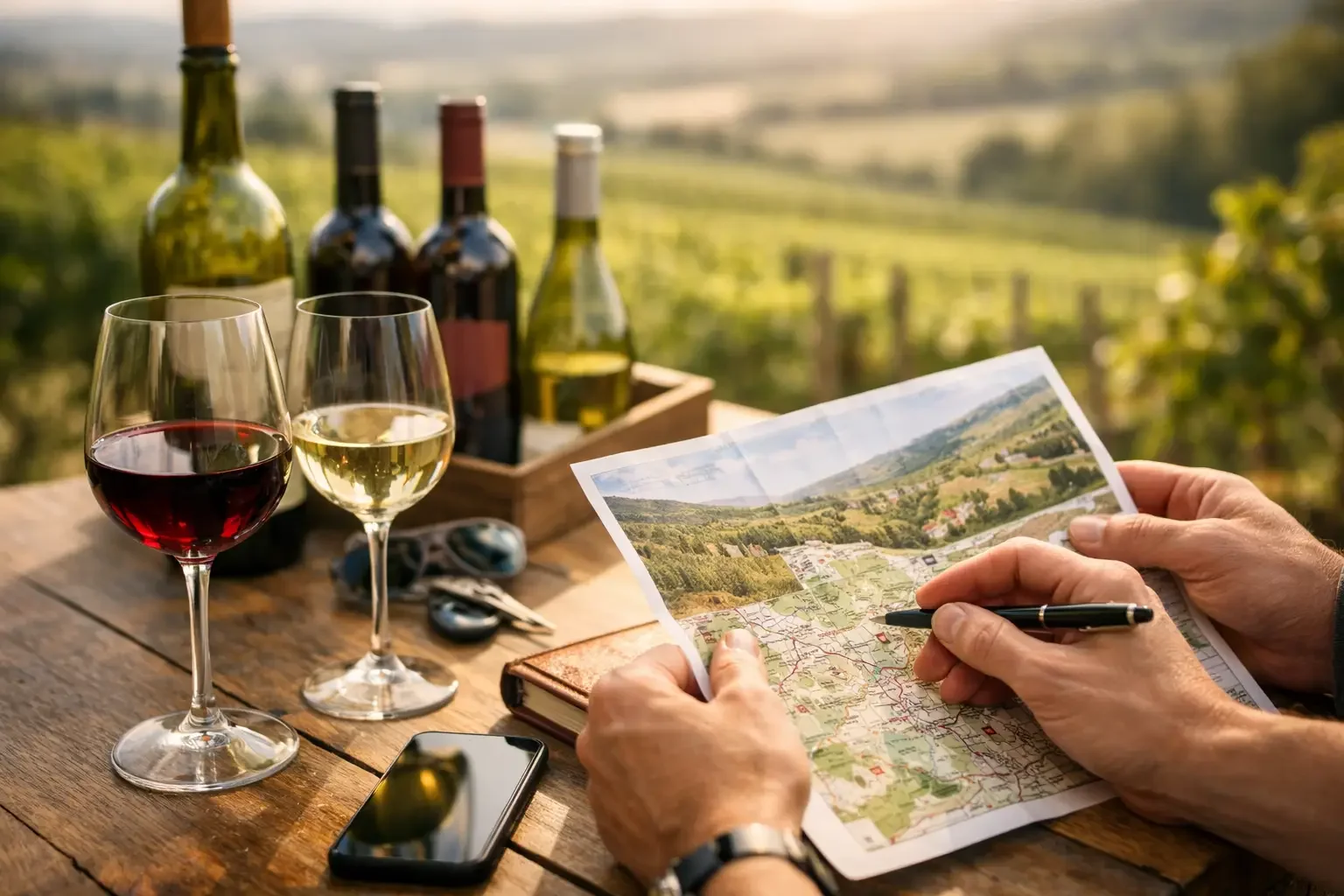
A custom winery itinerary service is not about squeezing the most tasting rooms into one afternoon. It is about building a wine-country day that feels like it was made for you: the right wines, the right pace, a good lunch, and enough breathing room to remember more than the parking lots.
Wine travel looks easy from the outside. Pick a famous region, book a few tastings, and follow the map. But the best trips are shaped by details that do not show up in a search result: which appointment is actually worth the drive, where hospitality feels warm rather than rushed, whether a vineyard tour will delight your group or make everyone hungry and late, and how much wine education is welcome before it starts to feel like homework.
You do not need a certification before you are allowed to have an opinion about wine. You also do not need to spend hours becoming a regional expert before planning a trip. You need a clear sense of what will make the day enjoyable for the people you are traveling with.
What a custom winery itinerary service actually does
A thoughtful itinerary starts with questions, not a list of “best wineries.” Are you drawn to crisp whites, big reds, sparkling wine, or simply beautiful places to sit with a glass? Is this a couples’ weekend, a birthday trip, a client outing, or a group of friends with very different wine comfort levels? Do you want to meet the people making the wine, have a polished food-and-wine experience, or keep things casual?
Those answers change the plan. A serious collector may be thrilled by a small-production appointment and a deep conversation about vineyard sites. A group of friends may get more from a relaxed tasting with a great view, a cheese board, and a host who can explain the wines without turning the afternoon into a lecture. Neither approach is more legitimate. They are simply different trips.
A custom winery itinerary service turns those preferences into a practical route. That includes selecting producers, arranging appointments where appropriate, accounting for drive times, identifying lunch options, and making sure the day has a natural rhythm. It also means knowing when a popular stop is worth it and when a lesser-known winery offers a more personal, memorable experience.
The difference between a full day and a good day
The most common wine-country planning mistake is overbooking. Three tastings can sound modest when you are sitting at home, but each one may involve a reservation, a welcome, a seated flight, a walk through the property, a purchase decision, and a drive to the next stop. Add lunch, traffic, restroom breaks, and the very reasonable desire to linger over a wine you love, and the schedule gets tight fast.
For many visitors, two well-chosen tastings plus lunch create a better day than four hurried stops. This is especially true when the group is new to wine travel or when tasting fees are substantial. Fewer appointments leave room for conversation, photos, unexpected discoveries, and the simple pleasure of not watching the clock.
There are exceptions. If you are visiting a compact urban wine district, tasting rooms may be walkable and shorter by design. If you are an experienced taster on a focused buying trip, a fuller schedule can make sense. The goal is not to enforce a rule. It is to match the pace to the purpose.
Timing changes everything
Morning appointments tend to be calmer, and your palate is fresher. A late lunch can work beautifully between two tastings, while a heavy meal before a structured flight may dull the experience. In warm regions, outdoor time is often more comfortable earlier in the day. In colder seasons, a cozy indoor tasting may be the better choice.
A good plan also considers the less glamorous details. Some properties require advance reservations. Some do not welcome large groups. Some are a long, winding drive from town. Some have limited food nearby. These are not reasons to avoid them automatically, but they are reasons to plan with your actual day in mind.
Choosing wineries beyond the famous names
Well-known wineries can be excellent. They often have polished hospitality, beautiful grounds, reliable service, and a clear reason for their reputation. But fame is not the same thing as fit.
A more personal itinerary usually balances recognizable names with places that offer a different point of view. That might mean a family-run producer working with old vines, a winery known for one grape variety, a tasting room in a historic downtown, or an appointment with a winemaker whose story brings the region into focus.
When considering a winery, look past the score, the social media photos, and the bottle you saw on a restaurant list. Think about what the visit offers. Will you taste wines that are hard to find at home? Will the setting add something meaningful? Does the producer make wines in a style you genuinely enjoy? Is the experience accessible to everyone in your group?
That last question matters. A winery can make excellent wine and still be the wrong stop for a particular day. Perhaps the tasting is highly technical, the setting is formal, the roads are challenging, or the appointment runs longer than your group wants. A custom plan should protect the experience, not chase prestige.
Build around the people, not just the region
The best wine trips have a point of view. Maybe you want to understand why cool-climate Pinot Noir tastes so different from richer examples. Maybe you are celebrating an anniversary and want a quiet, beautiful lunch followed by one exceptional tasting. Maybe your group includes one enthusiastic wine person and three people who mostly want a fun afternoon.
All of those are useful starting points. They help determine the right mix of education, scenery, food, and flexibility.
For corporate groups, the balance is particularly important. The experience should feel polished and intentional, but guests should never feel tested. Good wine hospitality gives people something interesting to talk about, whether they know every grape variety or usually order whatever is on special. The best hosts make room for curiosity without making anyone feel behind.
At Wine, Uncomplicated, that is the standard: thoughtful guidance that brings confidence to the table without bringing wine-world attitude along with it.
Practical details worth deciding early
A customized plan is easier when a few choices are made before reservations open. Decide whether you will have a designated driver, book transportation, or stay close enough to walk between stops. Do not treat transportation as an afterthought. A beautiful winery is less charming when everyone is worried about getting back safely.
Set a comfortable budget, too. Tasting fees, bottles, lunch, transportation, and shipping can add up quickly, particularly in sought-after regions. A good itinerary does not need to be cheap, but it should be honest about the full cost. Sometimes one elevated experience and a simple local lunch is far more satisfying than trying to make every stop a splurge.
It also helps to discuss buying expectations. Some guests want to discover a bottle or two to bring home. Others are traveling light or do not want to ship wine. There is no wrong answer, but knowing it ahead of time prevents awkward pressure at the end of a tasting. The purpose is to enjoy the wines, not to prove appreciation through a purchase.
Questions to ask before your itinerary is built
Before working with a planner, spend a few minutes talking with your travel companions. You do not need formal tasting notes or a precise wish list. Straightforward answers are enough.
What wines do we usually enjoy, and what would we like to try?
Are we looking for scenery, food, education, celebration, or a mix?
How formal do we want the day to feel?
Is anyone avoiding alcohol, managing mobility needs, or uncomfortable with long drives?
Would we rather visit fewer places well or sample more broadly?
What is our realistic budget for the day?
These questions prevent the “I thought we were doing something different” problem. They also give a planner the information needed to make recommendations with confidence rather than relying on generic popularity.
Leave room for the part you cannot plan
A useful itinerary is structured, not rigid. It gets you where you need to be, but it leaves room for the moments that make travel feel personal: the bottle you decide to share at dinner, the vineyard dog that steals the show, the tasting-room conversation that changes how you think about a grape, or the small town you want to wander for an extra hour.
That is what a custom winery itinerary service should ultimately give you: not a packed calendar, but a wine-country day with enough intention behind it that you can relax, pay attention, and enjoy the people at the table with you.