
Somewhere in the last two weeks, you probably scrolled past a headline announcing that Champagne is about to get a lot stronger. Fifteen percent alcohol, the posts said, because of the heat. It made the national news in New Zealand. It ran in Ukraine and South Africa and all over the Swedish press. Fox Weather went looking for Champagne producers willing to come on camera and explain the new 15% norm.
There is no new 15% norm. Champagne is not going to be 15% alcohol, and the reason is not that anyone decided against it, it's that the yeast would die first.
But something genuinely did change in Champagne this year, and it's a better story than the one that traveled. So let's take it apart, because how this particular piece of misinformation got made is its own small lesson in why wine feels so confusing from the outside.
What actually changed in the rulebook
Here is the real news. On August 7, a French government order granted Champagne a temporary exception to its own appellation rules for the 2026 harvest, and the Comité Champagne confirmed it publicly on September 9. Under normal rules, Champagne that has been enriched (which means sugar was added to the juice before fermentation, an old and completely ordinary practice in the region) cannot exceed 13% total alcohol once it finishes its second fermentation in the bottle. The derogation lifts that ceiling to 15% for this year only.
That's it. That's the whole change. It applies to enriched wines, it's temporary, and the Comité Champagne has been clear it will affect only a small number of producers in a few specific pockets of the region.
Average potential alcohol across the whole appellation this year is still sitting below 12%, which is to say completely normal. The derogation exists so that a handful of growers in warmer subzones don't end up technically in violation of a rule written for a cooler climate. It is a paperwork fix, and it was reported as a flavor revolution.
Why 15% Champagne is not physically possible
This is the part that makes the headline collapse.
Sparkling wine gets its bubbles from a second fermentation inside the sealed bottle, and that fermentation is done by live yeast. Most yeast strains give out somewhere around 13.6% alcohol, and above roughly 14% you simply cannot complete the process at all, because the organism doing the work is dead. A standard second fermentation adds about 1.5% alcohol to the base wine, which means the still wine going into the bottle needs to be around 12% for the math to work.
Producers can adjust. They can build less pressure, adding less sugar and yeast so the wine gains 1% instead of 1.5%. They can use grape must instead of sugar for the second fermentation. Caroline Henry, who writes Terroir Champagne and has been reporting this vintage closely from the region, worked through the arithmetic and landed where every winemaker would: the highest any 2026 Champagne is realistically going to reach is somewhere between 13 and 13.5%.
For reference, there are already Champagnes on shelves above 13% today. Nobody wrote a headline about those.
So where did 15% come from?
From the Comité Champagne's own press conference, which is the part that's almost funny.
A journalist asked whether the derogation had been approved. The answer was yes, and it could have stopped there. Instead the explanation wandered into how the ceiling works, that most of France permits 15%, that Champagne had asked to be unlocked to the same level, and that hardly anyone would be affected anyway. All the qualifications were there. The number 15 was also there, sitting in the middle of a technical answer given to a room that mostly did not have the background to weigh it, and 15 is the part that made it into the wire story that went around the world.
Henry, who tracked the whole thing down, called it a hoax, though comedy of errors is probably closer to it. Nobody lied. A regulatory ceiling just got reported as a forecast.
The story underneath, which is the one worth telling
Strip out the bad number and 2026 in Champagne is remarkable.
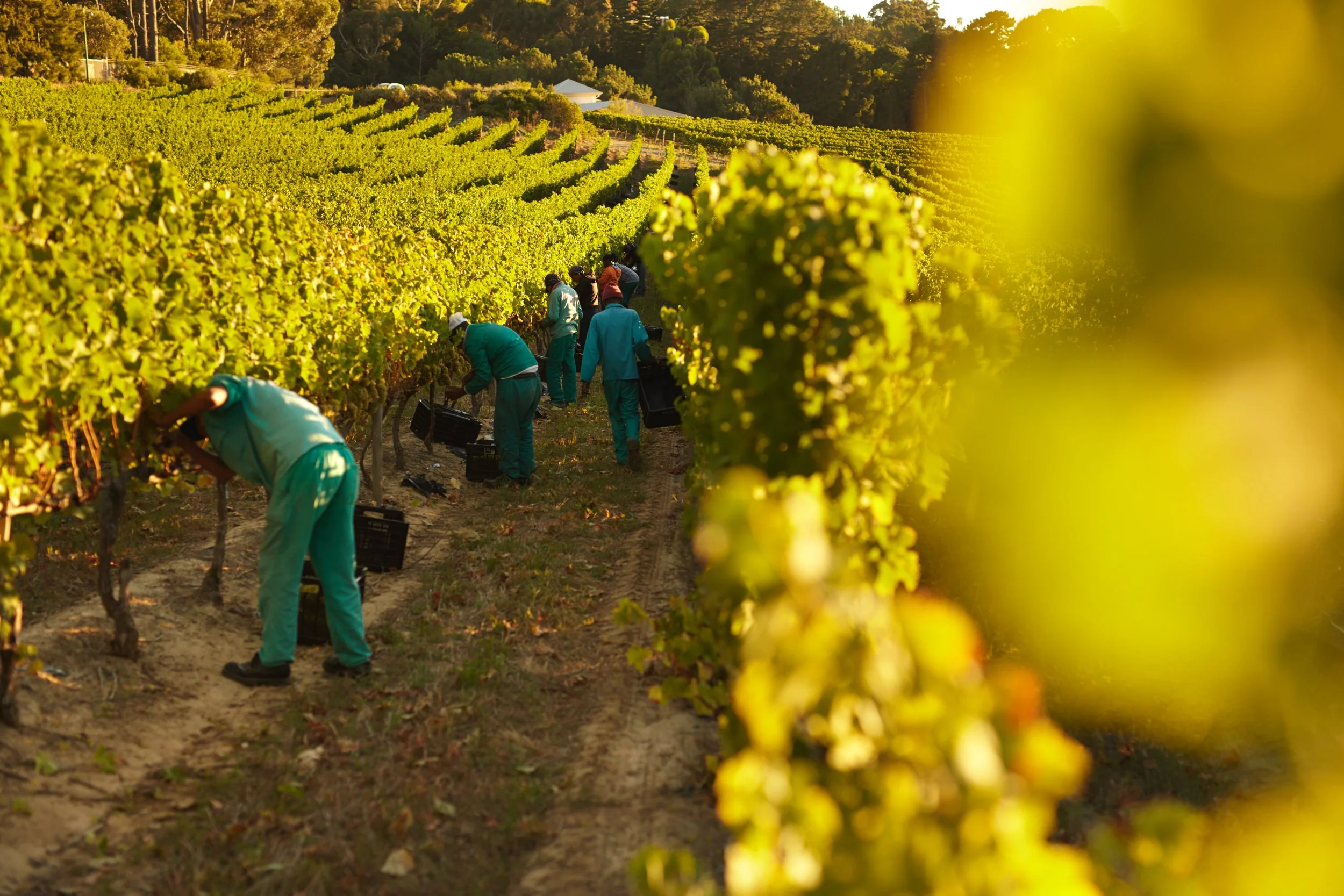
It was the earliest harvest in the region's recorded history. The first grapes came off on August 6, picking became widespread from August 17, and that's roughly two weeks ahead of 2025, which was itself considered an early year. The season that produced it was punishing and strange: severe spring frosts, unusually early flowering, then five separate heatwaves. Charles Philipponnat, who runs Champagne Philipponnat, measured just 40mm of rain from the first of June onward and brought his entire harvest in over nine days, because there wasn't much to pick.
The crop was tiny. Growers pulled in around 7,000 kg per hectare across the appellation against roughly 9,900 the year before. At Clos des Goisses, Philipponnat's famous walled vineyard, the average came in near 4,500 kg per hectare, about half a normal year.
And yet the fruit was exceptional. The Comité Champagne has called this the healthiest harvest in fifty years and says the vintage has the potential to make very great wines, comparing its balance to 1921, 1947 and 1959, which is not a list anyone invokes casually. Philipponnat's own numbers show why: ripeness that would normally flatten a wine, paired with pH readings between 3.16 and 3.20, which is to say the acidity held. "2026 is the opposite of every normal vintage," he said.
The small crop is part of why. Fewer grapes on the vine concentrated the sugar, which created the regulatory headache, and concentrated the acid and flavor right alongside it.
What this means for the bottle you're actually going to buy
Practically speaking, very little, and that's the honest answer.
The Champagne you open this New Year's was made from grapes picked years ago, since nearly all of it spends significant time aging before release. When 2026 does eventually reach you, it will taste like Champagne, it will be somewhere in its usual alcohol range, and the interesting thing about it will be the concentration and the freshness, not a number on the back label.
If you want a practical takeaway, it's this: a bottle's alcohol percentage is one of the least useful things you can know about it, and it tells you almost nothing about whether you'll enjoy drinking it. We wrote a whole piece on what to actually look at when you're choosing a bottle, and ABV doesn't make the list. The $5 Carmenère we keep recommending from Trader Joe's is proof enough that the numbers on a label rarely predict the pleasure in the glass.
Why we bothered writing 1,200 words about a technicality
Because this is exactly how wine ends up feeling intimidating.
A real but narrow regulatory change traveled through a press conference, a wire service, and a few thousand aggregators, and came out the other side as a fact that isn't true. Now it's in the water. Somebody is going to repeat it at a dinner party this month, someone else is going to feel too unsure to question it, and a small piece of wine knowledge that everyone now "knows" will be wrong.
That's the mechanism. Not snobbery exactly, just noise that hardens into received wisdom because nobody wants to be the one asking. We think the fix is boringly simple, which is that when something sounds surprising, it's usually worth asking how it works before repeating it. Wine rewards that kind of curiosity more than almost any subject we can think of, and it punishes it far less than people fear.
If you're a producer, there's a version of this that should worry you more, because the same machinery that turned a footnote into a global headline is the machinery telling your story when you aren't telling it yourself. That's a problem worth getting ahead of, and it's most of what we talk about with wine brands.
And if you're just someone who likes Champagne and wanted to know whether you'd been lied to: you had been, gently, by accident, and now you know how to tell the story correctly. That's a good thing to have at the next party you host.
If you'd like help building an evening around bottles like these, whether that's a tasting for your team or a group of friends, we'd love to hear what you have in mind. Come tell us about it.