
Last updated October 2026
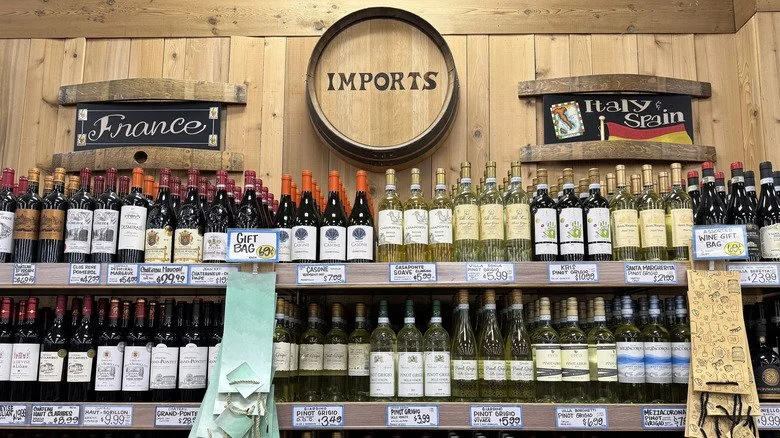
The best cheap red wine at Trader Joe's right now is the Panilonco Carmenere Reserva, usually $4.50 to $4.99. It is a Chilean red with dark fruit, plum and smooth tannins, and it tastes like a fifteen dollar bottle. If that is all you came for, go buy that one.
If you want the rest of it, I am a WSET II certified sommelier and I buy most of my weeknight wine at Trader Joe's, same as everyone else. Every bottle below is one I have actually opened and poured. I update this list monthly as I taste more, and I pull bottles off it when they stop being good or stop being stocked.
Is Trader Joe's wine actually good?
Some of it is very good, and the reason is how they buy.
Trader Joe's purchases in enormous volume and sells under private labels, which strips out the distributor markup and the brand marketing cost that make up a large share of what you pay for wine elsewhere. A nine dollar bottle at Trader Joe's often contains wine that would be priced at eighteen or twenty under a label you recognize.
The catch is that there is no quality floor. The same shelf holds genuinely excellent wine and genuinely forgettable wine at nearly identical prices, and nothing on the label tells you which is which. That is the entire reason a list like this is useful.
What's the best cheap red wine at Trader Joe's?
Panilonco Carmenere Reserva, $4.50 to $4.99. Chile, Colchagua Valley.
Carmenere has one of the best stories in wine. It was thought to be commercially extinct after phylloxera destroyed the vineyards of Bordeaux, and it survived only because Chilean growers had been growing it for decades while calling it Merlot. Nobody realized until DNA testing in the 1990s.
In the glass it is dark fruit, plum, smooth tannins and a little earthiness. It is medium bodied, it goes with weeknight food, and at four fifty it is the single best value in the store. I have written about this bottle on its own because it genuinely changed how I think about cheap wine.
The best red wines at Trader Joe's
Rioja Crianza, Javier San Pedro Randez, $7.99. Rioja, Spain.
Tempranillo, medium bodied, earthy, dark fruit and a little leather. Crianza is a legally defined aging category in Spain, meaning at least two years of aging with time in oak, so you know roughly what you are getting before you open it. This is the sweet spot of the Rioja tier system and eight dollars is a serious bargain for it.
Susumaniello, Ruggero di Bardo, around $10. Puglia, Italy.
The name means "little donkey" in the local dialect. The grape nearly went extinct and is now one of the fastest growing Italian imports in the United States. Medium acidity, low tannins, plum, black cherry and a touch of chocolate. Good for people who find Cabernet too aggressive.
Schiava, Vola, $9.99. Northern Italy.
Light ruby in the glass and genuinely light on the palate, closer to a rosé in weight than a standard red. Worth grabbing if you want a red you can chill slightly and drink in warm weather.
The best white wines at Trader Joe's
Albariño, Ruta 49, $9.99. Rías Baixas, Spain.
Stone fruit, citrus, a saline quality and high acidity. One of the most underrated white grapes there is, and this is the bottle I hand people who say they only drink Pinot Grigio. Start here if you have never had Albariño.
Muscadet Sur Lie, Vignobles Lacheteau, $7.99. Loire Valley, France.
Crisp, saline and built for oysters. "Sur lie" on the label means it aged on spent yeast, which gives it texture most wines at this price do not have. Eight dollars for real Loire Valley white is close to a mistake in your favor.
Verdejo, around $5. Rueda, Spain.
Spain's answer to Sauvignon Blanc, with the same herbal, grassy, citrusy energy plus a distinctive bitter almond finish. Bone dry and very food friendly. At five dollars this is the best white wine value in the store.
White Sangiovese, in Bianco 2024 by Barbanera, $9.99. Tuscany, Italy.
Sangiovese pressed immediately so the juice takes no color from the skins, which makes a red grape into a white wine. Stainless steel, no oak. Tart cherry, nectarine, tangerine and a bright finish. Strange in the best way, and a good bottle for a party where you want something to talk about.
Vermentino, Dogajolo by Carpineto, $14.99. Tuscany, Italy.
If Pinot Grigio is your usual Italian white, this is the upgrade. Citrus, white peach, a herbal note, bright acidity and a distinct almond finish that is hard to find elsewhere. Good with seafood or on a hot afternoon.
Gavi, Rosa dell'Olmo, $9.99. Piedmont, Italy.
Made from Cortese, and it comes from the region everyone associates with enormous tannic reds like Barolo. No oak and nothing to decode. Lemon, green apple, white flowers and a saline mineral quality. Twelve percent alcohol. My WSET instructor called Gavi the Miller Lite of Italian wine and meant it as a compliment, which is the most accurate description I have heard.
Chablis, Saint Celine 2024, $15.99. Burgundy, France.
If you think you do not like Chardonnay, try Chablis first. No oak and no butter, just lime zest, green apple and a chalky mineral finish. Real Burgundy for sixteen dollars.
Pouilly Fumé, Vignobles Lacheteau, $15.99. Loire Valley, France.
One hundred percent Sauvignon Blanc, unoaked, crisp and dry. The classic pairing is goat cheese and it is classic for a reason. Reliable in a way that matters when you are buying for other people.
Lubanzi Sauvignon Blanc Blend, around $12. Western Cape, South Africa.
Sauvignon Blanc blended with Colombard and given thirty days of skin contact, which gives it granadilla, guava and stone fruit rather than the usual grassy profile. B Corp certified, and the producer donates half of net profits to farming families.
The best rosé and sparkling at Trader Joe's
Sancerre Rosé, Moulin Jamet 2024, $15.99. Loire Valley, France.
One hundred percent Pinot Noir from one of the most prestigious appellations in France. Elegant, pale salmon, bone dry. This normally runs twenty five to thirty five dollars anywhere else, which makes it the biggest price gap on this entire list.
French Fizz Le Rosé, J.L. Quinson, $7.99. Southern France.
Frizzante style, meaning lower pressure than Champagne, so it sits between a still and a sparkling rosé. Light bubbles, a touch of sweetness, only 10.5% alcohol. It is sealed with a bottle cap and comes with its own stopper, so you can open it on a Tuesday without committing to the whole bottle. There is a white version right next to it.
What about a sweet wine?
Sauternes, Louis Eschenauer, $23 for 375ml. Bordeaux, France.
Made from grapes affected by noble rot, hand picked berry by berry. Honey, apricot and orange marmalade, sweet but with enough acidity to keep it from being cloying. Pair it with blue cheese and watch people's faces. This is a genuinely special-occasion wine at a price that does not feel like one.
What about Two Buck Chuck?
Charles Shaw is not on this list, and it is not snobbery.
It is drinkable and it has never hurt anyone, but the gap between it and the Panilonco Carmenere is far wider than the gap in price. If you are already standing in that aisle, spending the extra dollar or two gets you a meaningfully better bottle. That is the whole calculation.
What if my Trader Joe's doesn't have these?
Inventory varies by store and by state, because wine distribution in the United States is regulated state by state. Texas stores carry things California stores do not, and vice versa.
If a specific bottle is missing, buy by the pattern instead of the label. A Spanish Rioja Crianza under ten dollars is reliable regardless of producer. So is a Loire Valley Muscadet, a Rueda Verdejo, or a Chilean Carmenere. The region and the category are doing most of the work, not the brand.
That is also the most useful skill to build generally, and it is most of what reading a wine label actually gets you.
How I pick something that isn't on this list
Four things, in about thirty seconds at the shelf.
Look at whether the label leads with a grape or a place, because a place usually signals an Old World wine and more structure. Check the alcohol percentage, since under 12% tends toward lighter and crisper and over 14% toward richer and warmer. For whites and rosés, grab the most recent vintage on the shelf. And ignore any adjective that is not a place, a year, or a regulated aging term, because "Reserve" means nothing legally in the United States.
If you want that framework on your phone in the aisle, my free guide walks through it in about five minutes.
The full list, every store
This page covers Trader Joe's only. Every bottle I have ever recommended, including HEB, Total Wine and local Austin shops, lives in one running list organized by style and by store.
And if you would rather learn this with a glass in your hand and someone answering your actual questions, that is what the tastings are for.
Jennifer Strachan is the founder of Wine, Uncomplicated. WSET II certified, Texas Wine Ambassador, and has been making wine in West Texas since 2015. Every bottle on this list has been tasted personally. Prices are Texas retail and vary by state.